
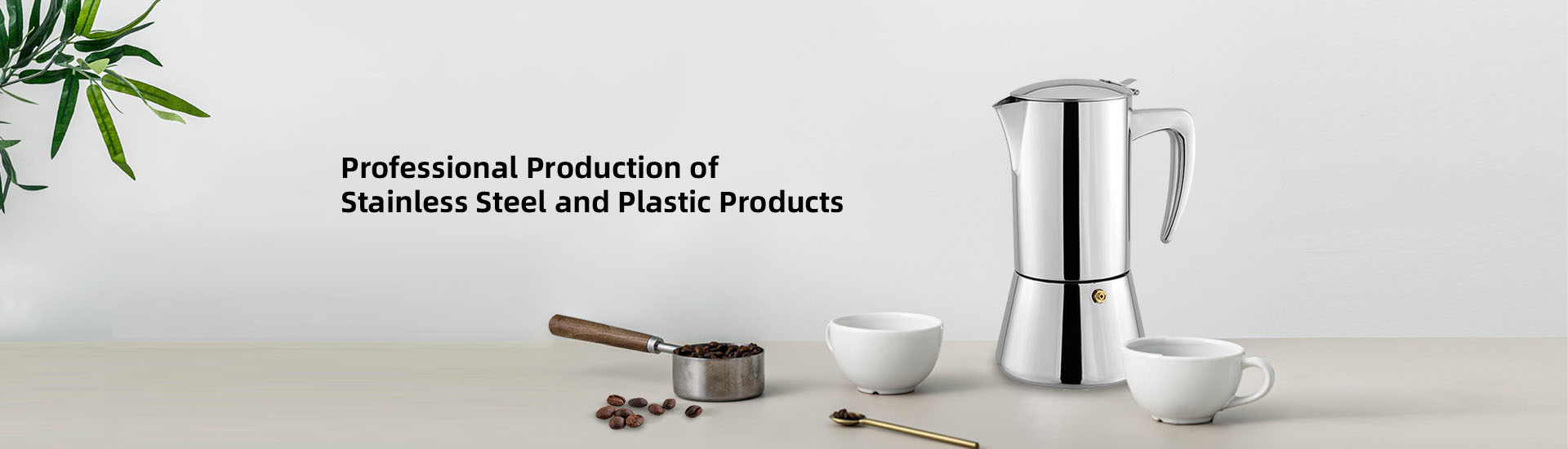
Cleaning a coffee maker is essential to maintain flavor quality, heating efficiency, and long-term product durability. Over time, mineral deposits, coffee oil residue, and moisture buildup can affect extraction stability and internal component performance.
From a manufacturer’s perspective, effective cleaning depends not only on user habits but also on structural design, material standards, and production precision. A properly engineered coffee maker should allow convenient maintenance without compromising electrical safety or internal sealing integrity.
As a professional manufacturer of coffee makers and stainless steel kitchenware with large-scale production facilities in Jiangmen, Sellwell integrates ISO9001-certified quality management, structured assembly processes, and export-compliant manufacturing standards to ensure stable and easy-to-maintain brewing systems across global markets.
Without routine cleaning, a Coffee Maker may experience:
Slower brew cycles
Weak or bitter taste
Mineral buildup in heating chamber
Clogged water channels
Overheating protection activation
Regular maintenance preserves extraction balance and extends appliance lifespan.
After brewing:
Remove used coffee grounds and filter.
Rinse filter basket and carafe with warm water.
Wipe the warming plate if spills occurred.
Empty and rinse the water reservoir if applicable.
Avoid abrasive tools that may scratch stainless steel or coated surfaces.
Smooth internal surface finishing improves resistance to residue adhesion.
For frequent use, perform deeper cleaning weekly.
Wash removable components with mild detergent.
Inspect spray head holes for blockage.
Wipe exterior surfaces.
Dry all components before reassembly.
Precision mold design ensures removable parts align securely after repeated disassembly.
Hard water deposits accumulate inside heating chambers and tubing.
Descaling procedure:
Fill reservoir with equal parts water and white vinegar.
Run a full brew cycle without coffee.
Allow solution to sit for 20 minutes.
Run 2–3 cycles of clean water to rinse.
Citric acid may also be used as an alternative.
Structured heating calibration ensures descaling solution circulates effectively through internal channels.
If brewing slows:
Remove spray head if detachable.
Rinse under warm water.
Clear blocked holes using a soft brush.
Avoid metal objects that may damage spray distribution accuracy.
Uniform injection molding improves long-term water flow consistency.
Ease of cleaning is influenced by engineering decisions made during production.
Sellwell integrates the following structured processes:
Food-grade stainless steel verification
Precision injection mold control for water pathways
Heating element integration and calibration
Surface polishing for reduced residue adhesion
Leak testing and insulation verification
Repeated brew-cycle endurance testing
Integrated production ensures stable heating and accessible cleaning structure across bulk supply.
Manufacturing control reduces clogging frequency and improves long-term reliability.
Critical inspection stages include:
Heating temperature consistency testing
Water flow rate measurement
Spray head distribution verification
Leak detection testing
Electrical insulation validation
Durability cycle simulation
ISO9001-based quality systems provide traceable documentation for each production batch.
Consistent inspection protects maintenance performance in mass production.
Coffee makers sourced through traders may involve different upstream suppliers, leading to variability in:
Heating element durability
Mold precision
Surface finishing quality
Assembly tolerance
This increases clogging risk and inconsistent cleaning behavior between batches.
Working directly with a manufacturer ensures:
Controlled raw material sourcing
Unified production standards
Stable heating calibration
Batch traceability
Manufacturing oversight ensures consistent maintenance performance across bulk supply environments.
For distributors and retail buyers, OEM or ODM development may include:
Enhanced anti-scale design
Modified spray head configuration
Upgraded stainless steel interior
Voltage adaptation (110V / 220V)
Branding and packaging customization
Structured engineering ensures modifications maintain extraction stability and electrical safety.
For project procurement, evaluate:
Production capacity stability
Heating consistency across batches
Certification documentation
Spare parts availability
Lead time reliability
Sellwell’s large-scale facility (approximately 60,000㎡ production area with 500+ employees) supports consistent mass production under structured quality management.
Stable manufacturing reduces return rates and service costs.
Coffee makers exported internationally must meet:
Electrical insulation standards
Thermal protection regulations
Food-contact material requirements
Regional voltage compatibility
Structured compliance testing ensures safe operation in Europe, North America, Japan, and other regulated markets.
Export readiness is embedded within the production workflow.
Cleaning a coffee maker involves routine rinsing, periodic deep cleaning, and regular descaling. However, long-term ease of maintenance depends on structural design, surface finishing quality, and disciplined manufacturing control.
For distributors, brand owners, and project buyers, selecting a manufacturer with integrated R&D, controlled assembly, and certified quality management ensures reliable brewing performance and reduced maintenance risk across global markets.
To clean a coffee maker effectively, perform daily rinsing, weekly deep cleaning, and monthly descaling. Proper maintenance preserves brewing quality and extends product lifespan.
Reliable cleaning performance is achieved through food-grade materials, calibrated heating systems, structured manufacturing processes, and strict quality control. By sourcing from a professional manufacturer with integrated production capability and export-compliant systems, buyers can ensure stable performance across international bulk supply markets.
Previous: How Much Coffee Per Cup in Coffee Maker

 WhatsApp:
 Phone:
 Contact Now