
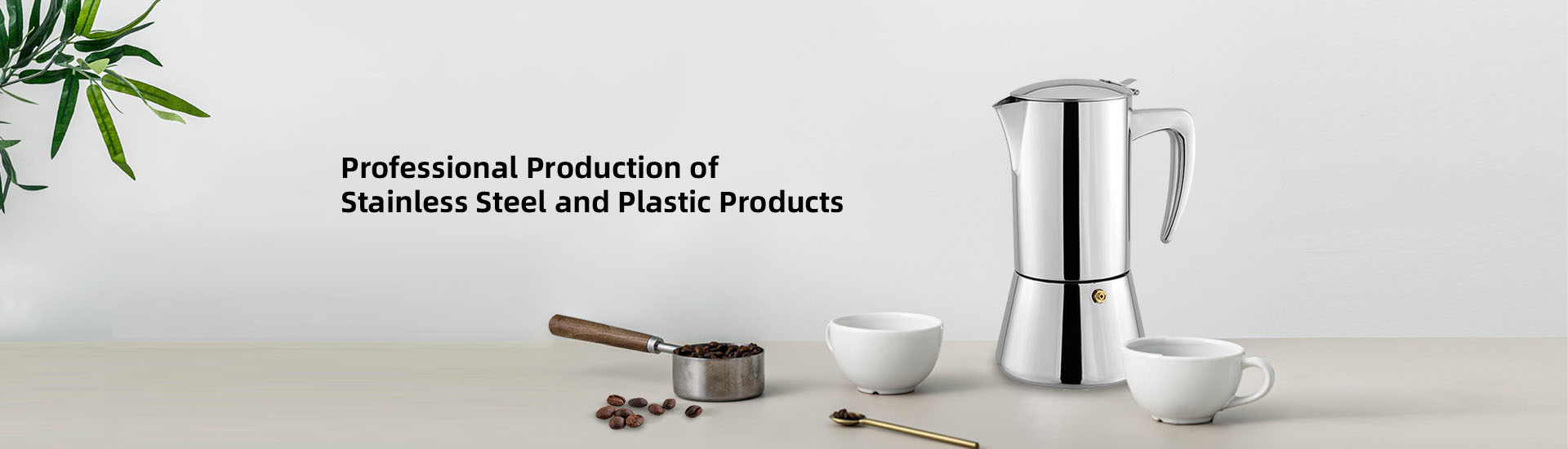
coffee makers are indispensable appliances in homes, offices, and hospitality settings, and regular cleaning is essential to maintain coffee quality and extend product lifespan. One common home cleaning question is whether apple cider vinegar can be used to descale and clean coffee makers. While vinegar is often cited as a DIY descaler, understanding its chemical effects, compatibility with materials, and implications for manufacturing standards is important—especially for buyers considering bulk procurement, OEM customization, or quality compliance.
Before exploring the cleaning topic, here’s an overview of your company’s product scope: Sellwell International Enterprises Limited produces a diverse range of coffee makers, Tea Makers, whistling kettles, and other kitchen accessories, leveraging its own stainless steel milling and plastic injection facilities since 1991 with ISO 9001:2015 and other audit certifications.
Apple cider vinegar contains acetic acid, which can dissolve mineral buildup (limescale) inside coffee maker water chambers and internal tubes. For occasional light descaling, vinegar may help break down deposits that affect flow and flavor. However, from a product performance and material lifecycle perspective, it is not always the most recommended descaler for long-term maintenance because:
Acetic acid is corrosive to certain metals and seals over repeated applications.
Vinegar may leave residue odors that are hard to flush from internal components.
Alternative descalers are formulated to match material standards used in coffee makers, preventing damage over time.
For products manufactured with food-grade stainless steel and precision seals, like those produced by Sellwell International Enterprises Limited, material compatibility and protective finishes matter in choosing descaling agents that do not compromise durability.
Coffee makers include components such as:
Stainless steel chambers and filters
Heat-resistant plastics for handles and lids
Silicone or rubber seals for water channels
Sellwell’s production emphasizes high-grade materials—such as 18/8 stainless steel with controlled thickness—ensuring not only strength and corrosion resistance but also compatibility with recommended cleaning agents. Vinegar’s relatively strong acidity may interact adversely with softer seal materials over frequent use; manufacturers typically advise calibration with material guidelines to avoid undue wear.
One advantage of sourcing coffee makers directly from a manufacturer rather than a trader is that manufacturers usually provide detailed material compatibility and maintenance recommendations based on internal production standards. Traders may lack access to such engineering insights or QC documentation.
Direct manufacturer involvement supports:
Clear guidance on recommended cleaning agents
Understanding of internal component materials
Advice on descaling frequency based on production design
These points help prevent improper maintenance. Competent suppliers can clarify which cleaning agents are safe for the specific model based on material and assembly standards.
During the OEM/ODM process, production partners can integrate maintenance guidelines into product documentation. This leads to:
Customized care labels matching specific materials
Tailored recommendations for water hardness and descaling frequency
Care instructions that align with export market regulations
For buyers requiring private labeling or custom instructions, discussing material properties and maintenance compatibility during design review helps avoid warranty issues associated with improper cleaning methods.
When sourcing coffee makers in bulk for hospitality or commercial use, equipment longevity is part of total cost of ownership. Descaling frequency and compatible cleaning agents influence long-term operating cost and service uptime. Bulk orders typically involve:
Evaluation of maintenance requirements
Assessment of cleaning agent recommendations
Verification of internal materials against common descalers
Ensuring that the supplier’s product design supports efficient maintenance with recommended agents (non-corrosive descalers formulated for stainless steel and elastomer seals) reduces long-term service issues.
When adding coffee makers to a sourcing list, consider including:
Material certification for internal water-contact surfaces
Recommended cleaning agents and maintenance schedules
Warranty terms covering descaling misuse
Documentation completeness for bulk shipment compliance
OEM/ODM custom maintenance instructions to match regional standards
This checklist helps procurement teams balance initial cost with lifetime performance and serviceability.
The way a coffee maker is fabricated influences how easy and safe it is to clean. For example:
Precision machining and assembly reduce crevices where scale can accumulate
High-quality seals resist degradation from heat and moisture
Smooth internal surfaces allow efficient flushing of deposits
Sellwell’s integrated stainless steel & plastic manufacturing capabilities support the production of coffee makers with consistent internal surface quality and structural reliability.
During production, rigorous quality control ensures that parts can withstand normal operating stress and maintenance cycles:
Inspection of internal bore finish to reduce scale adhesion
Seal integrity testing for repeated thermal expansion
Functional checks ensuring water flow and filtration performance
Robust QC checkpoints directly influence how products respond to cleaning practices and how long they perform optimally.
Products destined for export often require:
Clear labeling of materials and maintenance guidelines
Compliance with chemical safety standards for recommended cleaning agents
Documentation on product longevity and warranty covering maintenance practices
Manufacturers familiar with global markets integrate these elements into product packaging and documentation, ensuring that buyers worldwide receive products with clear guidance on proper care.
Apple cider vinegar can temporarily remove light mineral buildup in a coffee maker, but it is not always the best long-term solution—especially for products with specific material properties and seal designs. When sourcing coffee makers at scale, choosing a manufacturer with strong material standards, detailed maintenance guidance, structured OEM/ODM processes, and comprehensive quality control helps ensure that cleaning recommendations align with product durability and export compliance expectations. Understanding which descalers are safe for internal materials preserves performance over time and reduces service costs in bulk applications.

 WhatsApp:
 Phone:
 Contact Now