
A coffee maker is designed to provide consistent brewing performance, but regular use may eventually lead to issues such as slow water flow, weak coffee extraction, unusual noise, or heating problems. Understanding common coffee maker problems and maintenance methods helps users improve product lifespan and supports manufacturers in developing more reliable coffee solutions.
According to the U.S. Geological Survey, water hardness caused by dissolved minerals such as calcium and magnesium can affect equipment that uses water over time. Mineral buildup is one of the common reasons affecting heating systems and internal water channels.
From a manufacturer’s perspective, solving coffee maker problems starts before the product reaches the market. Product structure, material selection, manufacturing process, and quality control all influence long-term reliability.
Different problems may come from different parts of the machine. Understanding the possible causes helps improve maintenance efficiency.
| Common Issue | Possible Cause | Recommended Solution |
|---|---|---|
| Coffee maker does not heat properly | Heating component issue or mineral buildup | Check internal system and perform maintenance |
| Slow water flow | Scale accumulation or blocked channels | Clean internal water path |
| Weak coffee flavor | Incorrect brewing process or water flow problem | Check brewing components |
| Unusual noise | Air inside the system or component wear | Inspect internal structure |
| Leakage | Seal or connection issue | Check sealing components |
For manufacturers, reducing these problems requires reliable engineering and strict production management.
The difference between a manufacturer and a trader becomes important when evaluating coffee product reliability. A trader may supply finished products, but a manufacturer controls the complete production process from design to final inspection.
A professional coffee maker manufacturer manages:
Product structure development
Material selection
Component testing
Assembly control
Function inspection
Sellwell focuses on stainless steel and plastic product manufacturing, with its own stainless steel processing and plastic injection production facilities. The company has over 500 employees and a factory area of approximately 60,000 square meters, supporting OEM and ODM product development for global markets.
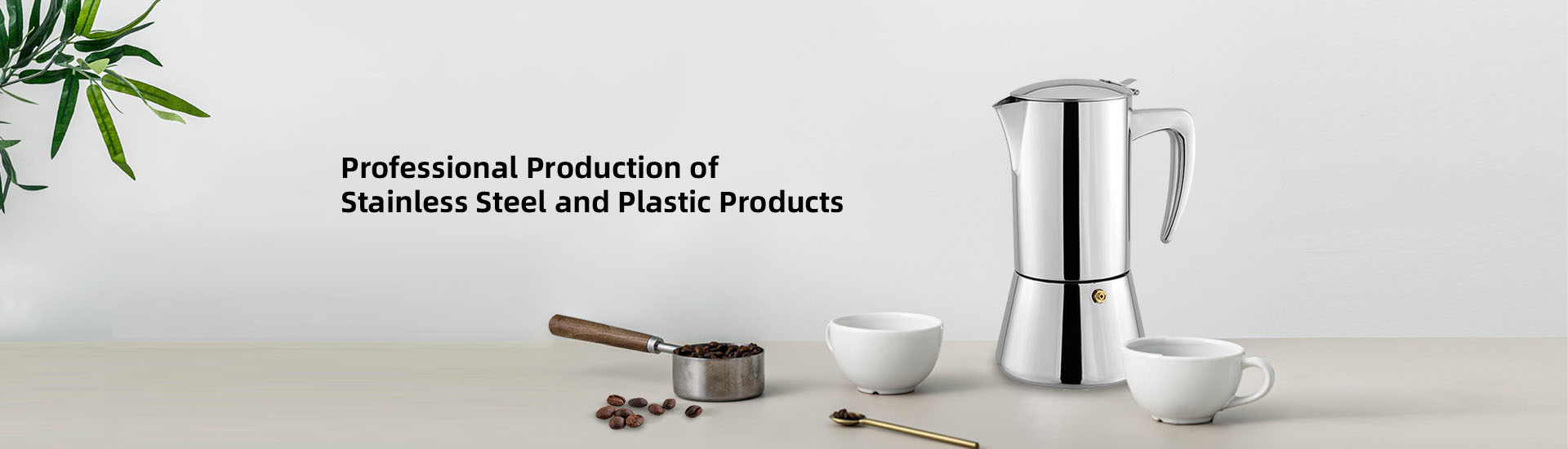
For different coffee applications, Sellwell develops products such as Stainless Steel Pour Over Coffee Maker Kettles, Stainless Steel French Press Coffee Maker Double Wall Metal Coffee Press, and 300ml Stainless Steel Espresso Coffee Maker with Bamboo Handle.
A reliable coffee maker requires careful control throughout the manufacturing process. Product performance depends on every production stage.
The manufacturing process usually includes:
Product design confirmation
Material preparation
Stainless steel processing
Plastic component manufacturing
Product assembly
Function testing
Each stage requires quality control checkpoints to ensure stable performance.
| Quality Control Stage | Purpose |
|---|---|
| Material inspection | Ensure safety and durability |
| Component testing | Confirm production consistency |
| Assembly inspection | Maintain structural accuracy |
| Function testing | Verify brewing performance |
| Final inspection | Ensure shipment quality |
A complete manufacturing process helps reduce product failures and improves customer experience.
Many coffee brands require customized products with different designs, materials, packaging, or market positioning. OEM and ODM cooperation allows manufacturers to provide flexible solutions.
A typical product development process includes:
Product requirement analysis
Design and specification confirmation
Prototype development
Function and quality testing
Mass production preparation
A manufacturer with integrated production capability can provide better communication and faster improvement during development.
Sellwell supports OEM and ODM projects and works with international brands, retailers, and buying offices through customized product development and manufacturing support.
Material selection directly affects coffee maker performance. Products that contact hot water need reliable materials to maintain safety, durability, and appearance.
Important material considerations include:
Food-grade stainless steel
Heat-resistant components
Durable plastic materials
Corrosion-resistant surfaces
For example, stainless steel coffee products often require precise forming, surface finishing, and inspection to maintain both appearance and functional performance.
For large quantity orders, product consistency is an important factor. A professional manufacturer should provide stable production capability and quality management.
A project sourcing checklist should include:
| Evaluation Item | Purpose |
|---|---|
| Factory capability | Confirm production capacity |
| Quality control system | Reduce product risks |
| Product customization | Support market needs |
| Packaging standards | Protect products during transportation |
| Export experience | Ensure smooth delivery |
Export market compliance should also be considered, including product documentation, packaging requirements, and shipping preparation.
Fixing coffee maker problems is not only about maintenance. Product reliability begins with engineering design, material selection, manufacturing control, and quality inspection.
Choosing an experienced coffee maker manufacturer helps ensure better product development, stable quality, and long-term supply support.
With stainless steel processing, plastic injection capabilities, and OEM and ODM experience, Sellwell provides coffee solutions designed for global markets, including manual brewing products, stainless steel coffee tools, and customized coffee product development.

 WhatsApp:
 Phone:
 Contact Now