
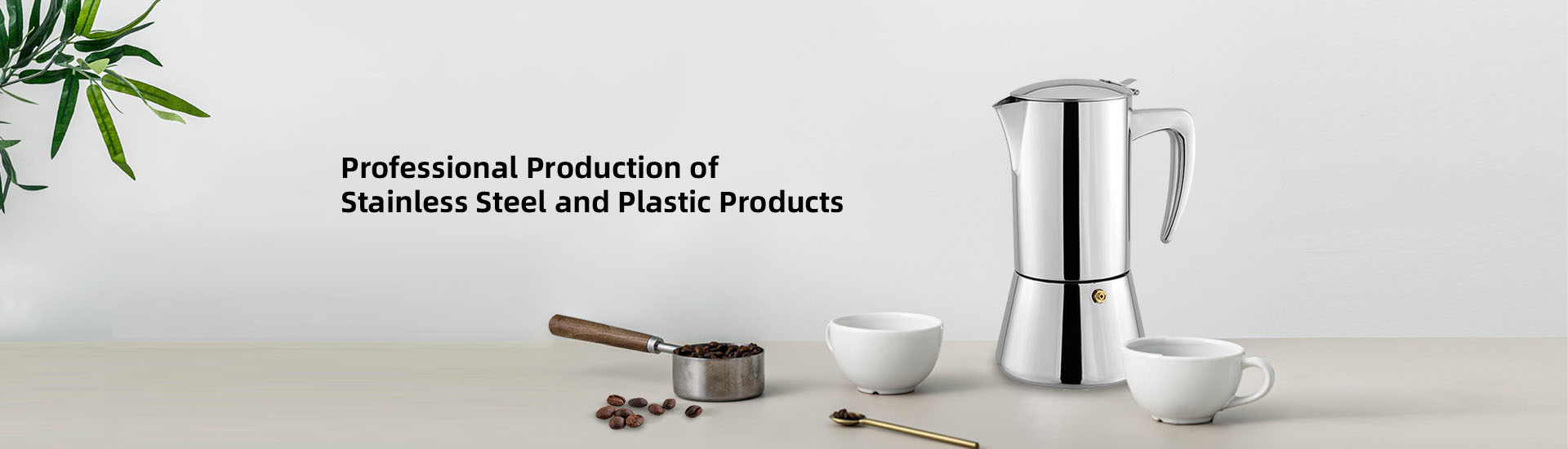
Stainless steel kitchen products are widely used because of their durability, corrosion resistance, and modern appearance. From storage containers and kitchen organizers to coffee accessories and household products, stainless steel manufacturing involves multiple production stages to ensure product quality, safety, and long-term performance.
According to the International Stainless Steel Forum, stainless steel is widely applied in food-related industries because of its strength, hygiene advantages, and resistance to corrosion. However, producing reliable stainless steel kitchen products requires more than selecting good materials. Product design, manufacturing processes, surface treatment, and quality control all influence the final result.
From a manufacturer’s perspective, understanding the complete production process helps create products that meet different market requirements.
The first step in stainless steel kitchen product manufacturing is selecting suitable raw materials. Different products require different material properties depending on their application.
Common considerations include:
Stainless steel grade
Thickness requirements
Corrosion resistance
Surface quality
Food-contact safety
A reliable manufacturer evaluates materials before production to ensure they meet product requirements.
| Material Evaluation | Purpose |
|---|---|
| Stainless steel grade | Determines durability and corrosion resistance |
| Material thickness | Influences product strength |
| Surface condition | Affects appearance quality |
| Safety standards | Supports product compliance |
Proper material preparation creates the foundation for stable production.
After material preparation, stainless steel sheets or components are processed into product structures. Different kitchen products require different manufacturing techniques.
The main manufacturing processes include:
Cutting
Stamping
Deep drawing
Welding
Polishing
Assembly
For example, stainless steel trash bins require accurate forming and welding to maintain structural strength, while coffee and tea products require precise shaping and surface finishing.
Sellwell specializes in stainless steel and plastic product manufacturing with its own stainless steel processing and plastic injection production facilities. This integrated production capability allows better control over product development and manufacturing quality. (SELLWELL)
Surface treatment plays an important role in stainless steel kitchen product quality. It not only improves appearance but also influences cleaning convenience and product durability.
Common surface finishing methods include:
| Surface Treatment | Application Benefit |
|---|---|
| Polishing | Creates a smooth appearance |
| Brushing | Provides a modern texture |
| Coating | Offers additional color options |
| Matte finishing | Reduces visible marks |
A professional manufacturer controls surface treatment carefully to maintain consistent appearance across large production volumes.
Quality control is essential in stainless steel kitchen product manufacturing. A reliable factory should inspect products during different production stages instead of only checking finished items.
Important quality control checkpoints include:
| Inspection Stage | Purpose |
|---|---|
| Raw material inspection | Confirm stainless steel quality |
| Production inspection | Maintain processing accuracy |
| Welding inspection | Ensure structural strength |
| Surface inspection | Control appearance |
| Final inspection | Confirm shipment quality |
These procedures help reduce production problems and improve product consistency.
The difference between a manufacturer and a trader becomes important when developing stainless steel kitchen products. A trader may provide existing products, but a manufacturer controls product design, production processes, and quality management.
A professional manufacturer can support:
Product development
Material selection
Manufacturing adjustment
Packaging customization
OEM and ODM projects
The OEM and ODM process usually includes:
Requirement analysis
Product design confirmation
Prototype development
Sample evaluation
Mass production
Sellwell works with global customers on OEM and ODM projects, providing customized stainless steel and plastic product solutions. (SELLWELL)
For large-volume kitchen product orders, production capability and supply stability are important factors.
A project sourcing checklist should include:
| Evaluation Item | Purpose |
|---|---|
| Factory capacity | Ensure stable production |
| Quality system | Maintain product consistency |
| Material management | Control product standards |
| Packaging capability | Protect products during shipping |
| Export experience | Support global delivery |
Sellwell’s factory was established in 1991, covers approximately 60,000 square meters, and employs more than 500 staff, supporting large-scale stainless steel and plastic product manufacturing. (SELLWELL)
International kitchen product supply requires manufacturers to understand export requirements, documentation, and packaging standards.
Important considerations include:
Product specifications
Quality inspection records
Export packaging
Transportation protection
Market-specific requirements
A professional manufacturer prepares these requirements throughout the production process to support smooth global delivery.
Stainless steel kitchen product manufacturing involves multiple stages, from material selection and forming to surface finishing and quality inspection. Every stage affects the final product performance.
Choosing an experienced stainless steel kitchenware manufacturer helps ensure better production control, customization support, and stable supply capability.
With stainless steel processing, plastic injection capabilities, and OEM and ODM experience, Sellwell provides customized kitchenware and household product solutions designed for global markets.

 WhatsApp:
 Phone:
 Contact Now