
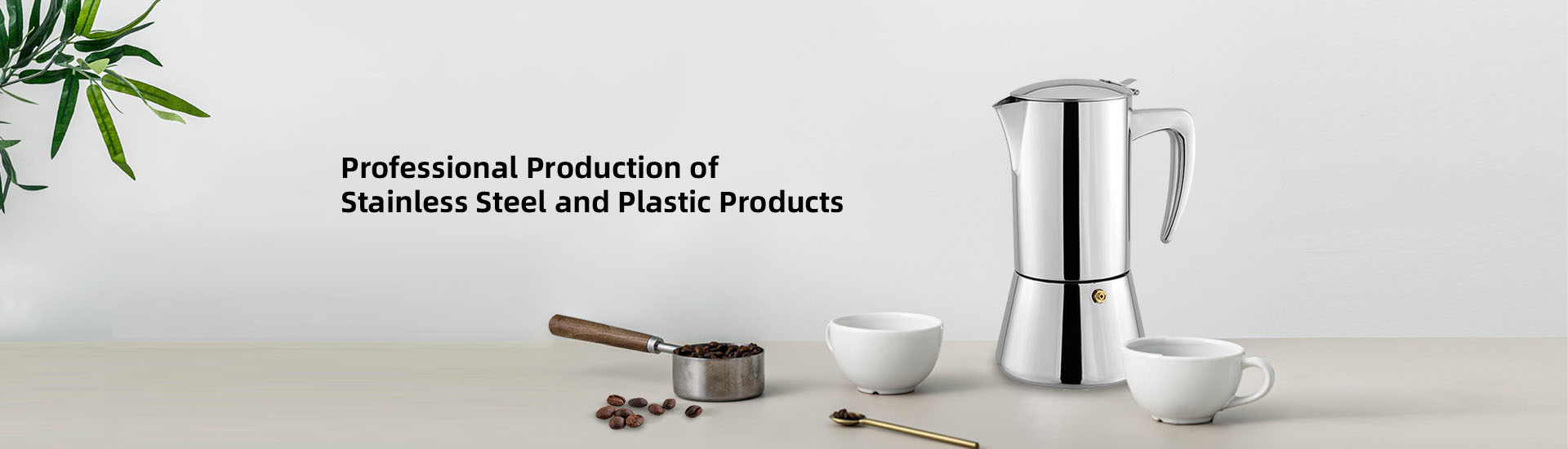
Surface finishing is an important step in stainless steel product manufacturing because it affects appearance, durability, cleaning convenience, and product positioning. From kitchenware and storage products to coffee accessories and household items, different finishing methods can create different visual effects and performance characteristics.
According to the International Stainless Steel Forum, stainless steel is widely used in food-related and household applications because of its corrosion resistance, strength, and hygienic advantages. However, the final quality of a stainless steel product depends not only on the material itself but also on how the surface is processed.
From a manufacturer’s perspective, choosing the right surface finishing method requires considering product function, production efficiency, maintenance requirements, and market expectations.
The surface treatment process improves both product appearance and practical performance. A properly finished stainless steel product can provide better resistance to stains, scratches, and daily wear.
Key benefits of surface finishing include:
Improved appearance
Easier cleaning
Better corrosion resistance
Enhanced product value
More design options
For kitchen and household products, surface quality is especially important because consumers often evaluate product quality through visual appearance and touch experience.
Different products require different finishing methods based on their application and design requirements.
| Surface Finishing Method | Characteristics | Common Applications |
|---|---|---|
| Polished Finish | Smooth and reflective surface | Premium kitchen products and accessories |
| Brushed Finish | Modern texture with reduced fingerprints | Kitchenware and household products |
| Matte Finish | Soft appearance and easy maintenance | Contemporary product designs |
| Coating Finish | Provides additional colors and protection | Decorative stainless steel products |
Each finishing method requires different processing techniques and quality control standards.
Brushed finishing is one of the most commonly used methods for stainless steel kitchen products. The surface is processed to create a consistent texture that provides a modern appearance.
Advantages include:
Reduces visible fingerprints
Provides a premium appearance
Supports daily cleaning
Creates a uniform surface texture
This finish is commonly used for products such as kitchen organizers, trash bins, and other household items.
Sellwell specializes in stainless steel and plastic product manufacturing with its own stainless steel processing facilities. This integrated capability allows better control over material selection, surface treatment, and product quality. (SELLWELL)
For example, Sellwell develops products such as Stainless Steel Round Shape Kitchen Garbage Can with different surface options designed for various market requirements. (SELLWELL)
Polishing creates a smoother and brighter stainless steel surface. This process requires careful control because uneven polishing can affect product appearance.
The polishing process usually includes:
Surface preparation
Grinding
Fine polishing
Surface inspection
Quality control during polishing helps maintain consistent appearance across large production volumes.
| Inspection Stage | Purpose |
|---|---|
| Surface preparation | Remove processing marks |
| Polishing inspection | Maintain consistent brightness |
| Appearance checking | Ensure visual quality |
| Final inspection | Confirm finished product standards |
Surface finishing is only one part of stainless steel product manufacturing. A complete production process includes multiple stages.
The manufacturing process usually includes:
Raw material inspection
Cutting and forming
Welding
Surface finishing
Assembly
Final testing
Quality control checkpoints are necessary throughout production.
| Quality Control Stage | Purpose |
|---|---|
| Material inspection | Confirm stainless steel specifications |
| Forming inspection | Maintain product accuracy |
| Welding inspection | Ensure structural strength |
| Surface inspection | Control finishing quality |
| Final testing | Confirm product performance |
A professional manufacturer manages surface quality from production planning to final shipment.
The difference between a manufacturer and a trader becomes important when developing stainless steel products. A manufacturer understands how materials, processing methods, and finishing techniques affect the final product.
A professional manufacturer can support:
Surface finishing selection
Product structure development
Material recommendations
Prototype improvement
Mass production
The OEM and ODM process usually includes:
Product requirement analysis
Design confirmation
Prototype production
Sample evaluation
Mass manufacturing
Sellwell supports OEM and ODM projects with stainless steel and plastic manufacturing capabilities, helping develop customized products for different markets. (SELLWELL)
For large-volume orders, maintaining consistent surface finishing quality is essential.
A project sourcing checklist should include:
| Evaluation Item | Purpose |
|---|---|
| Surface finishing capability | Ensure appearance consistency |
| Production capacity | Support bulk orders |
| Quality inspection | Reduce production risks |
| Material management | Maintain standards |
| Export experience | Support international delivery |
Sellwell’s factory was established in 1991, covers approximately 60,000 square meters, and employs more than 500 staff, supporting large-scale stainless steel and plastic product manufacturing. (SELLWELL)
For international stainless steel product supply, manufacturers should consider material requirements, product documentation, packaging standards, and export regulations.
Important considerations include:
Material specifications
Surface quality requirements
Inspection records
Export packaging
Market-specific standards
Professional manufacturing systems help ensure consistent quality for global markets.
Surface finishing plays an important role in stainless steel product manufacturing. The right finishing method improves appearance, durability, and market suitability.
Choosing an experienced stainless steel product manufacturer helps ensure better material selection, processing control, quality management, and customization support.
With stainless steel processing, plastic injection capabilities, and OEM and ODM experience, Sellwell provides customized kitchenware and household product solutions designed for global markets.

 WhatsApp:
 Phone:
 Contact Now