
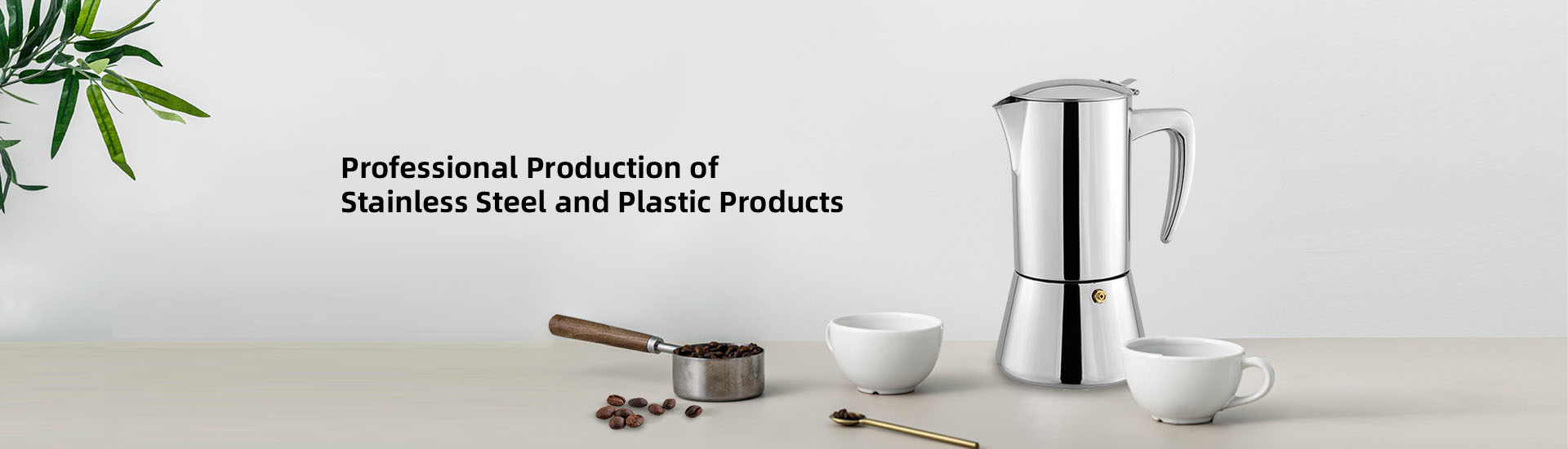
Customized home products create stronger market differentiation because they allow brands to control design, materials, functions, and packaging, while standard products mainly compete through price and availability.
Standard home products are manufactured according to existing designs, specifications, and production processes. They are usually ready for mass distribution and are suitable for businesses that need fast delivery and stable supply.
Customized home products are developed based on specific market requirements, including product structure, appearance, materials, colors, functions, and branding elements. Manufacturers adjust production processes to help brands create products with unique market positioning.
For household products such as stainless steel kitchenware, storage solutions, bathroom accessories, and home organization products, customization provides more opportunities to match regional preferences and consumer expectations.
Standard products offer advantages in production efficiency and cost control, but their biggest limitation is that multiple sellers may offer similar designs.
Common characteristics of standard home products include:
Fixed product structures and dimensions
Limited material and surface finish choices
Faster production and shorter development cycles
Lower initial development investment
These features make standard products suitable for retailers requiring quick inventory replenishment. However, when many suppliers provide similar products, brands often compete mainly through pricing, promotion, and distribution channels.
For markets with strong brand competition, relying only on standard products can make it difficult to establish a recognizable product identity.
Customized home products create differentiation by connecting product design with specific customer needs and market trends.
A professional manufacturer can support customization in several areas:
Different markets have different expectations for household products. A kitchen organizer designed for compact apartments may require space-saving structures, while products for large households may focus on capacity and durability.
Customization allows products to match specific usage scenarios instead of following a universal design.
Material choice directly affects product appearance, durability, and perceived value.
For stainless steel household products, manufacturers can develop different finishes such as polished, brushed, or matte surfaces according to brand positioning. Material selection can also influence product performance in areas such as corrosion resistance and daily maintenance.
Customized products can include additional features based on market feedback.
Examples include:
Improved storage capacity
Multi-functional kitchen organization designs
Enhanced product stability
User-friendly handles or opening mechanisms
Space-saving structures
These improvements help products provide stronger practical value compared with common alternatives.
The choice between standard and customized home products depends on business goals, sales channels, and market positioning.
| Comparison Factor | Standard Home Products | Customized Home Products |
|---|---|---|
| Development Time | Faster launch | Longer development process |
| Initial Cost | Lower investment | Higher development investment |
| Product Uniqueness | Limited differentiation | Strong market identity |
| Design Flexibility | Fixed specifications | Adjustable design options |
| Brand Building | Depends on marketing | Supported by product uniqueness |
| Market Adaptability | General applications | Specific customer requirements |
Standard products are effective for businesses prioritizing speed and inventory efficiency. Customized products are more suitable for brands seeking long-term differentiation and stronger customer recognition.
Successful customization requires more than changing product appearance. It depends on complete manufacturing capabilities, including design support, material processing, production control, and quality management.
A manufacturer with integrated stainless steel processing and plastic injection capabilities can provide more flexible product development solutions.
Important capabilities include:
Product structure optimization
Prototype development support
Metal fabrication and finishing
Plastic component production
Assembly and quality inspection
Packaging customization
These capabilities help transform product concepts into reliable commercial products.
The decision should be based on market positioning rather than only production cost.
Standard products are suitable when:
Entering a new market quickly
Testing product demand
Building initial product categories
Managing limited inventory investment
Customized products are suitable when:
Creating a private label product line
Building stronger brand recognition
Targeting specific consumer groups
Differentiating from competing products
Developing long-term product strategies
Many successful home product brands combine both approaches by starting with proven standard designs and gradually developing customized products based on market feedback.
Customization quality depends heavily on manufacturing experience. A manufacturer needs to understand not only production requirements but also practical usage conditions, material performance, and market expectations.
With experience in household product manufacturing, manufacturers can provide valuable support from design optimization to final production. This reduces development risks and improves product consistency.
For stainless steel and plastic home products, combining engineering expertise with flexible production capabilities helps create products that are functional, durable, and commercially competitive.
Customized home products create stronger market differentiation because they provide greater control over design, functionality, and brand identity. Standard products remain valuable for fast market entry, but customized solutions offer more opportunities for brands to build unique product positioning and long-term competitiveness.
Choosing the right manufacturing approach depends on market goals, but customization is often the key advantage when creating recognizable home product collections.

 WhatsApp:
 Phone:
 Contact Now