
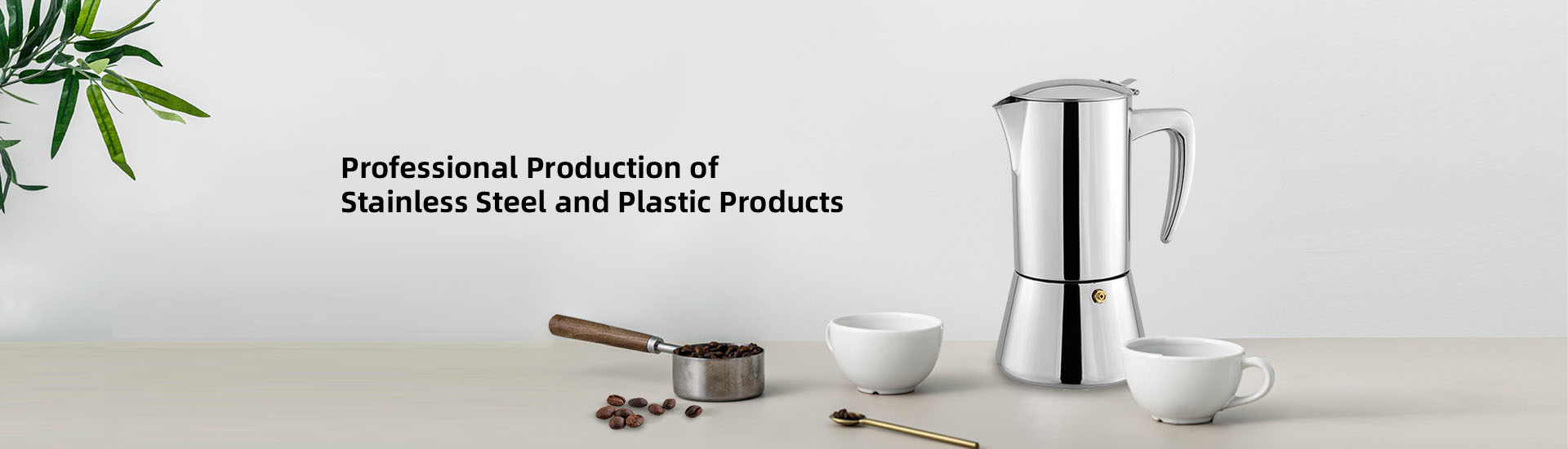
Stainless steel manufacturing offers superior durability and premium appearance, while plastic injection manufacturing provides higher design flexibility and cost efficiency. The better choice depends on product requirements and market positioning.
Stainless steel manufacturing uses metal forming processes to create products with high strength, corrosion resistance, and long service life. Common processes include cutting, stamping, welding, polishing, bending, and surface finishing.
Plastic injection manufacturing uses molds to produce plastic components by injecting melted plastic materials into specific shapes. This process is known for high production efficiency, complex design possibilities, and consistent product output.
For household products such as kitchenware, storage solutions, bathroom accessories, and home organization products, choosing between stainless steel and plastic manufacturing depends on factors including durability, appearance, production volume, and target market requirements.
Stainless steel is valued for its strength, clean appearance, and long-term performance.
Key advantages include:
High resistance to corrosion and rust
Strong mechanical durability
Premium metal appearance
Easy cleaning and maintenance
Better heat resistance compared with many plastics
Products such as stainless steel kettles, kitchen utensils, storage canisters, and bathroom accessories often use metal manufacturing because consumers associate stainless steel with quality and reliability.
Manufacturing experience is important because stainless steel product quality depends on material selection, forming accuracy, welding quality, and surface treatment consistency.
Plastic injection manufacturing provides excellent efficiency and design flexibility.
Its main advantages include:
Faster mass production cycles
Lower production cost for large quantities
Complex shape development capability
Lightweight product structures
Wide range of material choices
Plastic injection is commonly used for product components that require detailed structures, ergonomic designs, or integrated functions.
For household products, plastic components can improve product flexibility while helping manufacturers optimize overall production costs.
The performance difference between stainless steel and plastic depends on the application.
| Comparison Factor | Stainless Steel Manufacturing | Plastic Injection Manufacturing |
|---|---|---|
| Durability | Excellent strength and long service life | Good performance with suitable materials |
| Weight | Heavier structure | Lightweight design |
| Appearance | Premium metallic finish | Flexible colors and textures |
| Heat Resistance | Higher heat tolerance | Depends on plastic material type |
| Design Flexibility | Limited by metal forming processes | High flexibility through mold design |
| Production Cost | Higher material and processing cost | Lower cost for high-volume production |
| Product Positioning | Premium and professional products | Cost-effective and versatile products |
Both manufacturing methods provide unique advantages, and the best solution depends on product goals.
Stainless steel products often create stronger premium positioning because of their durability and material perception.
For example, stainless steel kitchen products can emphasize:
Long-term household use
Professional appearance
Better resistance to daily wear
Higher perceived product value
Plastic products can create value through:
Affordable pricing
Functional design
Lightweight handling
Color and style variety
The right manufacturing choice should match customer expectations rather than focusing only on material cost.
Yes. Many modern household products combine both materials to achieve better performance.
Examples include:
Stainless steel body with plastic handles
Metal structures with plastic storage components
Stainless steel kitchen tools with ergonomic plastic grips
Bathroom accessories combining metal frames and plastic parts
Combining materials allows manufacturers to balance durability, user comfort, production efficiency, and cost control.
A manufacturer with both stainless steel processing and plastic injection capabilities can provide more flexible product development solutions.
The selection between stainless steel and plastic manufacturing should consider several practical factors:
Products exposed to moisture, heat, or frequent handling may benefit from stainless steel durability.
Large-scale production with complex designs may benefit from injection molding efficiency.
Premium household products often emphasize material quality, while mass-market products may prioritize cost efficiency and design variety.
Products requiring unique structures, functions, or branding elements need manufacturers with strong development capabilities.
Material selection affects not only product appearance but also production reliability and market performance.
Experienced manufacturers evaluate:
Product function requirements
Material performance
Manufacturing feasibility
Production efficiency
Quality consistency
For household products, the best results often come from combining material knowledge with practical manufacturing experience.
Neither stainless steel manufacturing nor plastic injection manufacturing is universally better. Each process solves different product development challenges.
Stainless steel manufacturing is ideal for products requiring durability, premium appearance, and long service life. Plastic injection manufacturing is suitable for products requiring complex designs, lightweight structures, and efficient mass production.
A manufacturer with integrated metal processing and plastic injection capabilities can help develop products that balance quality, function, and market competitiveness.

 WhatsApp:
 Phone:
 Contact Now