
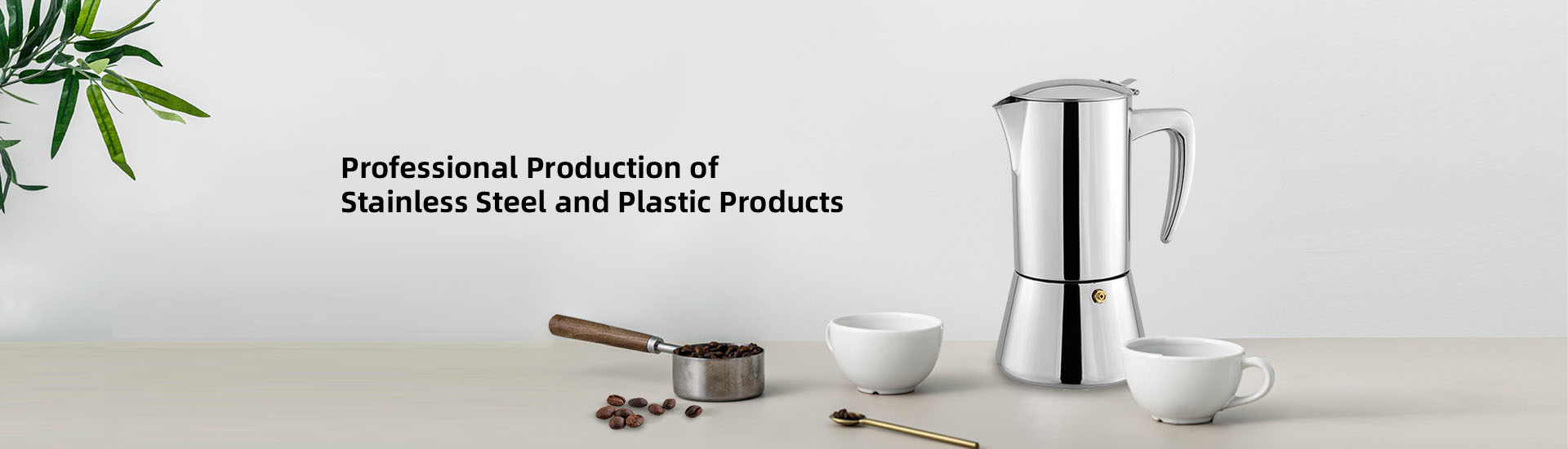
An integrated stainless steel and plastic manufacturer provides greater flexibility because it combines multiple production capabilities, simplifies supply chain management, and supports more complex product development.
An integrated stainless steel and plastic manufacturer has the capability to process different materials within one production system. This includes stainless steel fabrication, plastic injection molding, component assembly, and quality control management.
A single material factory focuses on one production field, such as stainless steel processing or plastic injection manufacturing. This specialized approach can provide strong expertise in a specific material but may require cooperation with additional suppliers when products involve multiple materials.
For household products such as kitchenware, storage solutions, bathroom accessories, and home organization products, choosing the right manufacturing partner directly affects product design flexibility, production efficiency, and quality consistency.
Many household products today combine different materials to achieve better performance, appearance, and user experience.
Common examples include:
Stainless steel bodies with plastic handles
Metal frames with plastic storage components
Stainless steel kitchen tools with ergonomic grips
Bathroom accessories combining metal structures and plastic parts
Using multiple materials allows products to balance durability, functionality, comfort, and production cost.
An integrated manufacturer can manage these material combinations more efficiently because design, engineering, and production processes are coordinated within the same manufacturing system.
Single material factories have advantages in specialized production.
Their strengths may include:
Deep expertise in one manufacturing process
Focused equipment investment
Strong material-specific production experience
Efficient processes for dedicated products
For products requiring only one material, a specialized factory can provide effective manufacturing solutions.
However, when products require different materials or components, additional suppliers may be needed, which can increase communication complexity and production coordination challenges.
Working with an integrated stainless steel and plastic manufacturer reduces the need to coordinate multiple production partners.
The advantages include:
Unified product development communication
Simplified quality management
Better production scheduling
Reduced supplier coordination costs
Faster problem solving
When a product includes stainless steel and plastic components, managing everything through one manufacturing partner helps maintain consistency from initial design to final assembly.
| Comparison Factor | Integrated Stainless Steel and Plastic Manufacturer | Single Material Factory |
|---|---|---|
| Material Capability | Multiple material processing | One primary material focus |
| Product Development | Suitable for complex products | Better for single-material products |
| Supplier Management | One production partner | May require multiple suppliers |
| Quality Coordination | Unified quality control | Separate quality systems |
| Design Flexibility | Higher customization options | Limited by material capability |
| Production Communication | More efficient | Requires additional coordination |
Integrated manufacturers usually provide greater customization flexibility because they can evaluate the complete product structure.
Customization support may include:
Material combination optimization
Product structure improvement
Component design adjustment
Surface finish selection
Assembly solutions
Packaging customization
For example, a kitchen product may require a stainless steel structure for durability and plastic components for improved handling comfort. A multi-material manufacturer can optimize both parts together instead of treating them as separate products.
Quality control becomes more efficient when different production processes are managed under one system.
An integrated manufacturer can control:
Stainless steel material quality
Plastic component consistency
Assembly accuracy
Product appearance
Final performance inspection
With multiple suppliers, quality standards may vary between different production stages. Additional inspection and coordination may be required to ensure the final product meets expectations.
Although integrated manufacturing may involve broader production capabilities, it can provide better long-term cost control.
Cost advantages include:
Reduced supplier management costs
Lower communication expenses
More efficient production planning
Better material coordination
Reduced assembly complexity
For products requiring both stainless steel and plastic components, using separate suppliers may increase hidden costs related to transportation, coordination, and quality management.
A single material factory may be suitable when:
The product uses only one material
The design is simple and fixed
Specialized processing is the main requirement
No customization is needed
For example, a pure stainless steel product or a simple plastic component may not require multi-material manufacturing capabilities.
An integrated manufacturer is a better choice when products require:
Multiple material combinations
Custom product development
OEM or ODM cooperation
Consistent quality management
Long-term product improvement
For household product brands, integrated manufacturing creates more opportunities to develop products with better functionality, stronger appearance, and improved market competitiveness.
Combining stainless steel and plastic requires knowledge of different production technologies and how materials work together.
Experienced manufacturers understand:
Material compatibility
Structural design requirements
Production sequence planning
Assembly challenges
Quality inspection standards
This experience helps ensure that final products achieve reliable performance and consistent quality.
The best partner depends on product complexity and business goals.
A single material factory provides specialized production expertise, while an integrated stainless steel and plastic manufacturer offers broader capabilities, easier coordination, and stronger customization potential.
For household products requiring flexible design, combined materials, and reliable supply management, an integrated manufacturer provides a more complete manufacturing solution.

 WhatsApp:
 Phone:
 Contact Now