
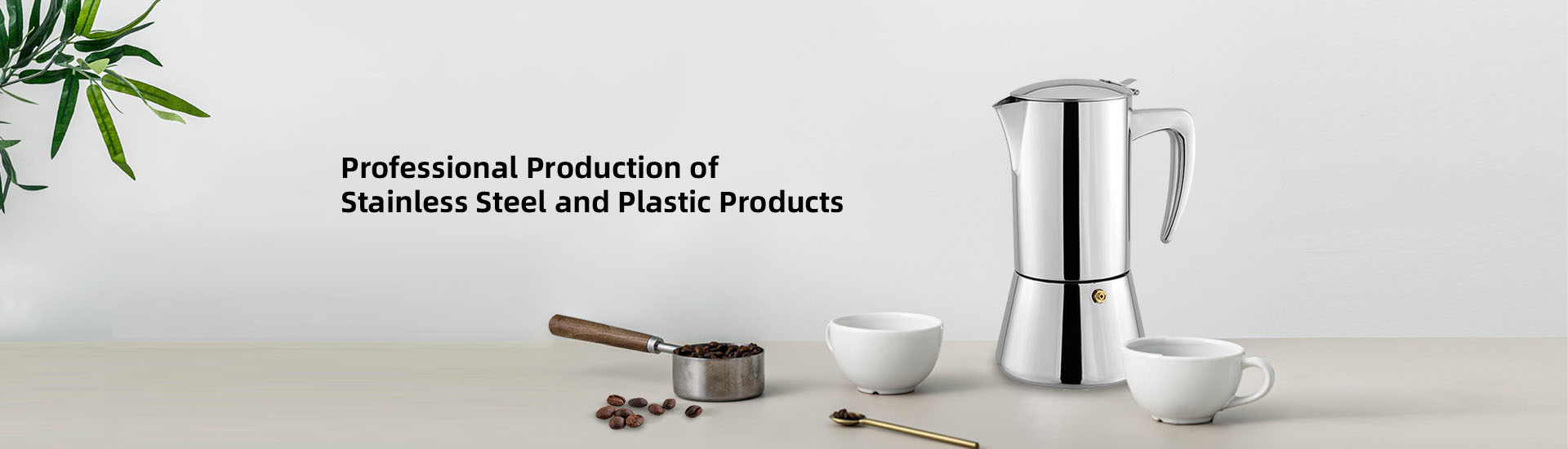
Stainless steel coffee makers generally provide better durability because they offer higher impact resistance, longer service life, and stronger protection for daily use compared with glass coffee makers.
The main difference between stainless steel and glass coffee makers is the material structure and performance characteristics.
A stainless steel coffee maker uses metal construction to provide strength, durability, and resistance against daily wear. Stainless steel is commonly selected for products requiring long-term use, reliable performance, and premium appearance.
A glass coffee maker uses heat-resistant glass components that provide visual transparency and allow users to observe the brewing process. Glass designs create an elegant appearance but require more careful handling due to their fragile characteristics.
For coffee product manufacturers, material selection affects not only product durability but also design positioning, production processes, and target market applications.
Stainless steel is widely used in coffee makers because of its strong physical properties.
Key durability advantages include:
High resistance to impact and deformation
Better protection during transportation and daily use
Strong corrosion resistance
Longer product lifespan
Stable performance under repeated use
Stainless steel coffee makers are especially suitable for environments where products experience frequent handling, such as hotels, offices, restaurants, and commercial coffee areas.
From a manufacturing perspective, durability depends on material quality, forming accuracy, welding processes, and surface finishing techniques.
Glass coffee makers offer unique benefits through transparency and visual appeal.
Their main advantages include:
Clear visibility of coffee brewing
Modern and elegant appearance
Easy monitoring of coffee volume
Compatibility with different design styles
Heat-resistant glass allows users to observe the extraction process, which creates a more interactive coffee experience.
However, glass requires additional protection during production, packaging, and transportation because it is more vulnerable to impact compared with stainless steel.
The durability difference between the two materials can be seen in several areas.
| Comparison Factor | Stainless Steel Coffee Maker | Glass Coffee Maker |
|---|---|---|
| Impact Resistance | Excellent | Lower due to fragile structure |
| Service Life | Long-term durability | Depends on handling conditions |
| Heat Performance | Strong thermal stability | Good with heat-resistant glass |
| Maintenance | Easy daily maintenance | Requires careful handling |
| Appearance | Premium metal finish | Transparent modern design |
| Transportation Safety | Easier protection | Requires stronger packaging |
For products designed for frequent use, stainless steel generally provides better overall durability.
Commercial environments require products that can handle frequent operation and repeated cleaning.
Stainless steel coffee makers are often preferred for:
Hotels
Restaurants
Offices
Catering services
Professional coffee stations
Their strong structure reduces replacement frequency and improves long-term operating value.
Glass coffee makers can still be suitable for:
Home coffee enthusiasts
Specialty coffee demonstrations
Premium table service
Lifestyle retail markets
Their visual appeal creates a different user experience.
Yes. Stainless steel often creates a stronger premium perception because consumers associate metal construction with durability and quality.
For coffee product brands, stainless steel designs can support:
Premium product positioning
Longer product lifecycle
Professional market applications
Higher perceived value
Surface treatments such as polishing, brushing, and matte finishing can further improve product appearance and differentiate product collections.
Material selection is only one part of coffee maker durability. Manufacturing quality also plays an important role.
Important production factors include:
The grade and consistency of stainless steel or glass directly influence product reliability.
Handles, lids, filters, and connection points must be designed to withstand daily operation.
For stainless steel coffee makers, finishing processes affect appearance, corrosion resistance, and user experience.
Manufacturers evaluate product assembly, durability, safety, and performance before shipment.
Yes. Many coffee products combine stainless steel and glass to balance durability and visual experience.
Common combinations include:
Glass brewing containers with stainless steel frames
Stainless steel filters with glass bodies
Metal handles with heat-resistant glass containers
This hybrid approach allows manufacturers to combine the transparency of glass with the strength of stainless steel.
The better material depends on product positioning and target users.
Stainless steel coffee makers are ideal for brands focusing on durability, premium quality, and long-term use. Glass coffee makers are suitable for brands emphasizing visual experience, brewing visibility, and modern design.
For manufacturers developing coffee product solutions, understanding material characteristics helps create products that match different market expectations.
Stainless steel coffee makers provide stronger durability, better impact resistance, and wider commercial applications. Glass coffee makers provide visual advantages and a unique brewing experience.
For products requiring reliable long-term performance, stainless steel is generally the more durable choice. For products focused on appearance and user interaction, glass remains a valuable option.

 WhatsApp:
 Phone:
 Contact Now