
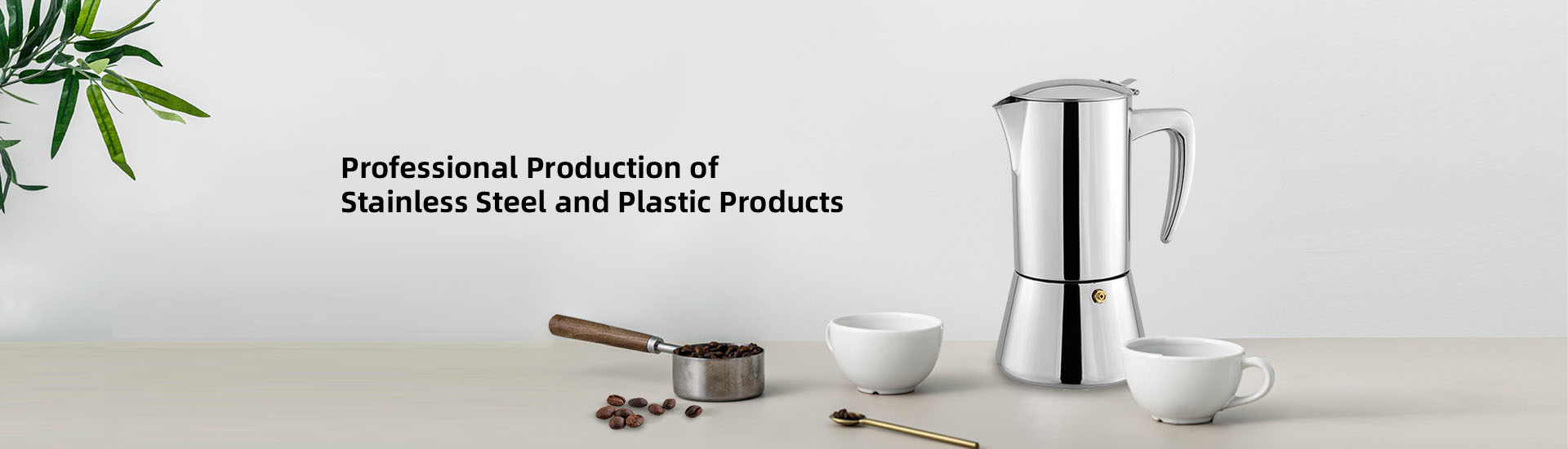
Portable coffee makers provide mobility and convenience, while countertop coffee makers offer higher capacity and stable brewing performance. The better choice depends on lifestyle requirements, usage scenarios, and product positioning.
Portable coffee makers and countertop coffee makers are designed for different coffee preparation environments.
A portable coffee maker focuses on mobility and compact design. It is developed for users who need coffee solutions during travel, outdoor activities, commuting, or limited-space situations.
A countertop coffee maker is designed for fixed locations such as kitchens, offices, hotels, and cafes. It usually provides larger capacity, stronger stability, and more consistent daily operation.
For manufacturers, these different applications influence product structure, material selection, capacity design, and production requirements.
Portable coffee makers are designed around flexibility and convenience.
Their main features include:
Compact product structure
Lightweight design
Easy transportation
Simple operation
Space-saving performance
Modern consumers increasingly value products that fit flexible lifestyles. Portable coffee makers support coffee preparation in different environments without requiring a dedicated kitchen setup.
From a manufacturing perspective, portable designs require attention to:
Product size optimization
Structural strength
Component integration
User handling experience
Durable materials
Countertop coffee makers focus on performance, capacity, and long-term household or commercial use.
Their advantages include:
Larger brewing capacity
Stable placement
Higher output efficiency
More functional features
Better suitability for frequent use
Countertop designs are commonly used in fixed locations where users need regular coffee preparation throughout the day.
Manufacturing considerations include:
Product stability
Component durability
Brewing consistency
Easy maintenance
Professional appearance
Both designs serve different user needs.
| Comparison Factor | Portable Coffee Maker | Countertop Coffee Maker |
|---|---|---|
| Main Advantage | Mobility and convenience | Capacity and stability |
| Usage Location | Travel, outdoor, small spaces | Home, office, commercial areas |
| Product Size | Compact | Larger structure |
| Brewing Volume | Usually smaller | Usually higher |
| Storage Requirement | Minimal space needed | Requires fixed placement |
| Target Experience | Flexibility and freedom | Efficiency and consistency |
The better choice depends on how and where the coffee maker will be used.
The answer depends on household habits.
Portable coffee makers are suitable for:
Small apartments
Personal coffee preparation
Travel lifestyles
Flexible living environments
Countertop coffee makers are suitable for:
Family use
Multiple coffee preparation needs
Kitchen environments
Daily coffee routines
For home product brands, both categories represent different consumer segments.
Commercial environments usually require higher efficiency and reliability.
Countertop coffee makers are often preferred for:
Offices
Hotels
Restaurants
Coffee service areas
Their larger capacity and stable operation support frequent use.
Portable coffee makers may be suitable for:
Outdoor hospitality services
Travel-related markets
Lifestyle retail products
Personal premium coffee segments
The choice depends on customer expectations and service models.
The product structure creates different manufacturing requirements.
Portable coffee makers often emphasize:
Compact assembly
Lightweight materials
Durable external structures
Easy transportation
Countertop coffee makers often require:
Stable base structures
Higher capacity components
Long-term operational durability
More complex functional integration
Manufacturers must balance product performance, cost efficiency, and user experience during development.
Yes. Both product categories offer customization opportunities.
Customization options may include:
Product dimensions
Material selection
Surface finishing
Handle design
Packaging solutions
Brand elements
For stainless steel coffee products, manufacturers can provide different finishes such as polished or brushed surfaces to match different market positioning.
Material selection affects durability, appearance, and user experience.
Common materials include:
Provides strength, corrosion resistance, and premium appearance.
Offers transparency and visual brewing experience.
Provides lightweight design and flexible product structures.
Combining different materials allows manufacturers to create products that balance performance, cost, and design requirements.
Coffee maker production requires understanding both user needs and manufacturing processes.
Experienced manufacturers focus on:
Material performance
Product structure
Production consistency
Quality inspection
Market requirements
This knowledge helps develop coffee products that are reliable, practical, and suitable for different application scenarios.
Portable coffee makers better match flexible lifestyles by providing mobility, convenience, and space efficiency. Countertop coffee makers better serve users who need higher capacity, stable performance, and frequent coffee preparation.
For manufacturers and brands, understanding these differences helps create coffee solutions that meet changing consumer habits and different market opportunities.

 WhatsApp:
 Phone:
 Contact Now