
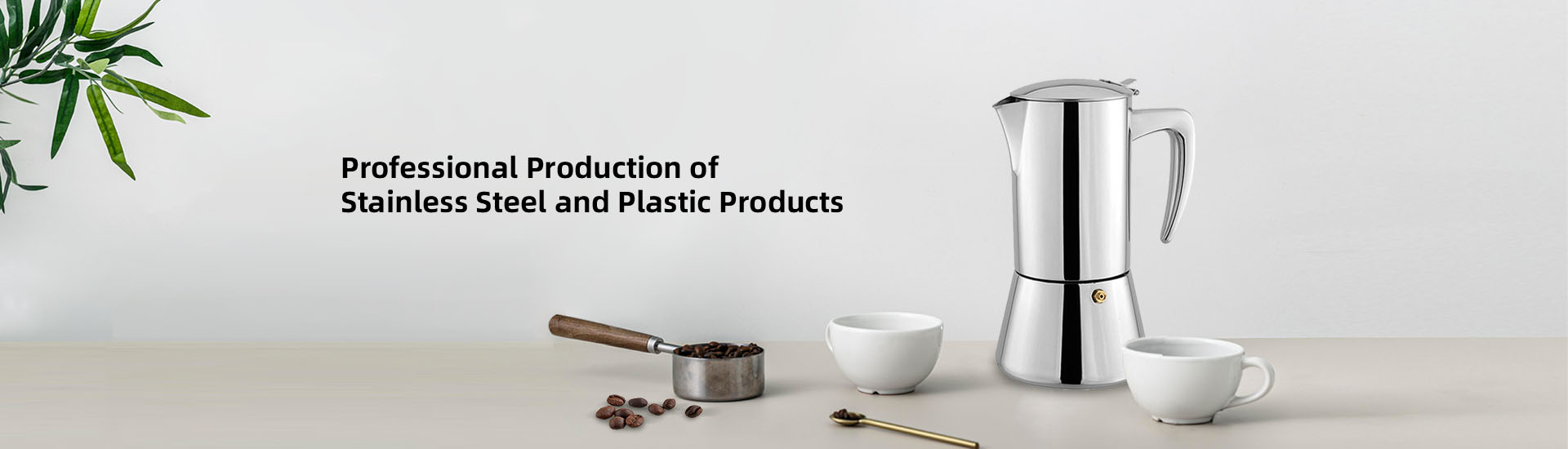
Injection molded plastic products usually provide better cost efficiency for high-volume production, while stainless steel products offer stronger durability and premium value. The better choice depends on production volume, product requirements, and market positioning.
Injection molded plastic products and stainless steel products use different materials and manufacturing methods.
Injection molded plastic products are produced by injecting melted plastic material into molds to create specific shapes. This process supports efficient mass production and complex product designs.
Stainless steel products are manufactured through metal processing methods such as stamping, forming, welding, and polishing. They are known for durability, strength, and premium appearance.
For manufacturers and brands, material selection affects production costs, product performance, customization options, and market value.
Injection molding provides strong cost advantages for large-volume production.
Key benefits include:
Efficient mass production
Lower unit cost at high quantities
Fast production cycles
Flexible product shapes
Reduced material waste
Once molds are developed, manufacturers can produce large quantities with consistent quality.
Injection molded plastic products are suitable for:
Consumer goods
Household accessories
Storage products
Lightweight kitchen products
Stainless steel products provide value through durability and long-term performance.
Their advantages include:
High structural strength
Excellent corrosion resistance
Long service life
Premium appearance
Better resistance to daily wear
Stainless steel products are commonly used for:
Kitchenware
Household products
Commercial supplies
Premium product collections
Manufacturing quality depends on:
Material selection
Metal forming accuracy
Welding processes
Surface treatment
Quality inspection
The cost differences depend on production scale and product requirements.
| Comparison Factor | Injection Molded Plastic Products | Stainless Steel Products |
|---|---|---|
| Initial Tooling Cost | Higher mold investment | Lower tooling complexity |
| Unit Cost at High Volume | Usually lower | Usually higher |
| Material Cost | Lower | Higher |
| Production Speed | Fast | Depends on process |
| Product Lifespan | Depends on material | Generally longer |
| Premium Value | Moderate | Higher |
Plastic products often provide cost advantages in mass production, while stainless steel products provide stronger long-term value.
Injection molded plastic products usually provide stronger cost advantages for large-scale manufacturing.
Reasons include:
Faster production cycles
Automated processes
Lower labor requirements
Consistent output
For products requiring millions of units, injection molding can significantly reduce production costs.
Stainless steel products often provide stronger long-term value because of their durability.
Advantages include:
Lower replacement frequency
Better resistance to damage
Longer product lifespan
Higher perceived quality
For premium household products and professional applications, stainless steel can create greater customer value.
Injection molded plastic products provide high design flexibility.
Manufacturers can create:
Complex shapes
Integrated structures
Different colors
Lightweight designs
Functional details
Stainless steel provides design advantages through:
Premium appearance
Structural strength
Surface finishing options
Metal craftsmanship
The best material depends on whether flexibility or durability is the priority.
The production processes are significantly different.
Injection molded plastic manufacturing includes:
Mold development
Plastic injection
Cooling and forming
Surface treatment
Assembly
Stainless steel manufacturing includes:
Sheet metal forming
Stamping
Welding
Polishing
Finishing
Each process requires different equipment, skills, and quality control systems.
Both materials support customization, but the methods are different.
Plastic product customization includes:
Mold design
Shape modification
Color selection
Functional integration
Stainless steel customization includes:
Product dimensions
Material thickness
Surface finishing
Structural changes
For unique premium products, stainless steel often provides stronger brand value.
Production volume is an important factor when selecting manufacturing methods.
Injection molded plastic is suitable for:
High-volume production
Standardized products
Cost-sensitive markets
Stainless steel is suitable for:
Medium to high-value products
Premium markets
Products requiring durability
Manufacturers evaluate expected volume, target price, and product positioning before selecting materials.
Yes. Many products combine both materials to balance performance and cost.
Common combinations include:
Stainless steel body with plastic components
Metal structures with plastic handles
Stainless steel functional parts with injection molded accessories
This approach helps manufacturers optimize:
Durability
Weight
Production efficiency
User experience
Reliable production requires professional capabilities in different areas.
Important capabilities include:
Product development
Material selection
Mold design
Metal processing
Injection molding
Surface treatment
Quality control
Manufacturers with multiple processing capabilities can provide more flexible product solutions.
The right choice depends on brand goals.
Injection molded plastic products are suitable for brands focusing on:
Affordable products
Large-volume markets
Flexible designs
Fast production
Stainless steel products are suitable for brands focusing on:
Premium positioning
Durability
Long-term value
Professional applications
Injection molded plastic products provide stronger cost advantages for high-volume production and flexible designs. Stainless steel products provide stronger value through durability, premium appearance, and long service life.
For manufacturers and brands, the most cost-effective solution depends on production volume, product requirements, target customers, and long-term market strategy.

 WhatsApp:
 Phone:
 Contact Now
