
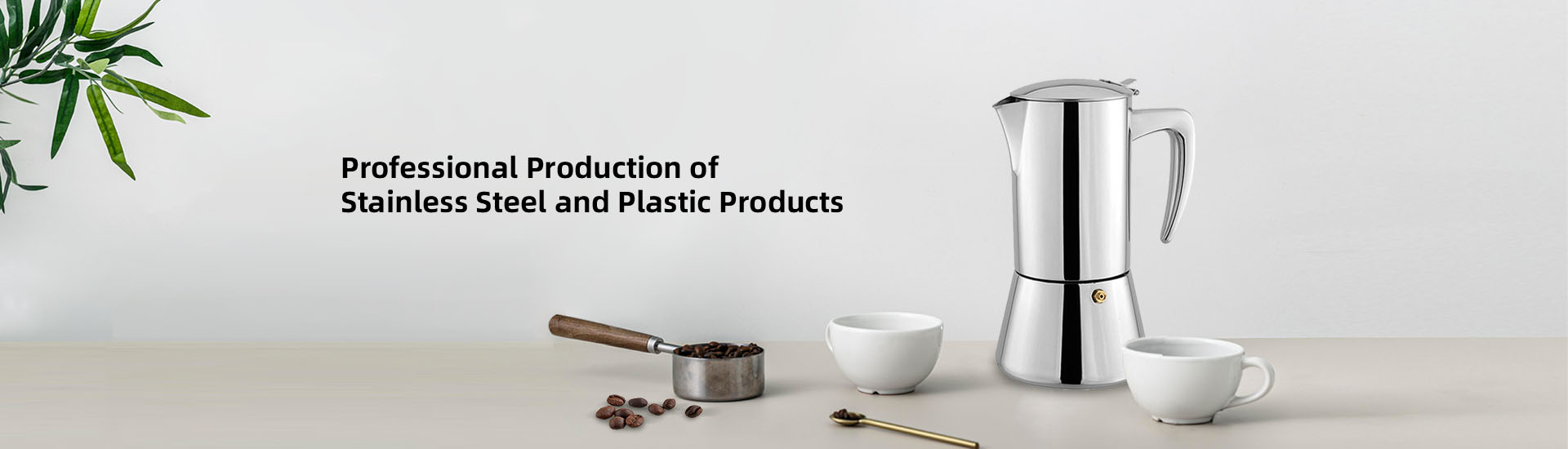
Metal kitchen tools generally provide longer service life through strength and durability, while plastic kitchen tools offer lightweight design and cost efficiency. The better choice depends on application requirements, product positioning, and user expectations.
Metal and plastic kitchen tools use different materials that influence durability, appearance, production methods, and market applications.
Metal kitchen tools are commonly made from stainless steel or other metal materials. They provide strong structures, high temperature resistance, and long-term performance.
Plastic kitchen tools use engineered plastic materials to achieve lightweight designs, flexible shapes, and efficient production.
For manufacturers, material selection affects product lifespan, manufacturing processes, cost structure, and target markets.
Metal kitchen tools are widely valued for their durability and strength.
Their advantages include:
High structural strength
Resistance to wear
Better heat performance
Long-term usability
Premium appearance
Common metal kitchen tools include:
Stainless steel spatulas
Tongs
Ladles
Whisks
Serving utensils
From a manufacturing perspective, service life depends on:
Metal grade selection
Product thickness
Welding quality
Surface treatment
Structural design
Plastic kitchen tools provide practical advantages for modern households.
Their benefits include:
Lightweight construction
Comfortable handling
Flexible designs
Lower production cost
Wide color options
They are commonly used for:
Cooking accessories
Storage tools
Household utensils
Lightweight kitchen products
Manufacturing quality depends on:
Plastic material selection
Injection molding accuracy
Heat resistance
Product structure
The differences can be seen across several areas.
| Comparison Factor | Metal Kitchen Tools | Plastic Kitchen Tools |
|---|---|---|
| Service Life | Generally longer | Depends on material quality |
| Strength | High | Moderate |
| Heat Resistance | Excellent | Depends on plastic type |
| Weight | Heavier | Lightweight |
| Design Flexibility | Moderate | High |
| Production Cost | Higher | Lower |
The better option depends on the intended application.
Metal kitchen tools usually perform better under frequent and heavy use.
Advantages include:
Resistance to bending
Better mechanical strength
Stable performance over time
Suitable for professional environments
For restaurants and commercial kitchens, metal tools are often preferred because of their durability.
Plastic tools can perform well for household applications when manufactured with suitable materials.
Metal tools generally provide stronger heat resistance.
Stainless steel tools can withstand:
High cooking temperatures
Direct heat exposure
Frequent cleaning cycles
Plastic tools require careful material selection because different plastics have different temperature limits.
Heat-resistant plastics can provide reliable performance for many household cooking applications.
Both materials create different types of product value.
Metal kitchen tools provide value through:
Durability
Premium appearance
Long service life
Professional image
Plastic kitchen tools provide value through:
Affordability
Lightweight use
Flexible designs
Consumer convenience
Brands choose materials according to customer expectations.
Plastic kitchen tools provide advantages for large-volume production.
Reasons include:
Efficient injection molding
Lower unit costs
Faster production cycles
Flexible design options
Metal kitchen tools are suitable for brands focusing on:
Premium products
Professional applications
Long-term durability
The production methods are different because of material characteristics.
Metal kitchen tool manufacturing includes:
Cutting
Forming
Welding
Polishing
Surface treatment
Plastic kitchen tool manufacturing includes:
Mold development
Injection molding
Cooling
Assembly
Quality testing
Each process requires different manufacturing expertise.
Both materials support customization.
Metal tool customization includes:
Product shape
Handle design
Surface finish
Material grade
Packaging
Plastic tool customization includes:
Colors
Shapes
Mold structures
Functional designs
Product combinations
Plastic provides more design flexibility, while metal provides stronger premium positioning.
Yes. Many modern kitchen tools combine both materials.
Examples include:
Stainless steel handles with plastic grips
Metal structures with plastic components
Hybrid kitchen tool sets
Combined designs help balance:
Durability
Comfort
Production efficiency
User experience
Reliable kitchen tool manufacturing requires expertise in:
Material selection
Product development
Metal processing
Injection molding
Surface treatment
Quality inspection
Manufacturers with multiple production capabilities can provide more flexible solutions.
The right material depends on brand positioning.
Metal kitchen tools are suitable for brands focusing on:
Premium kitchenware
Professional products
Long-term value
Plastic kitchen tools are suitable for brands focusing on:
Affordable products
Modern lifestyle solutions
Flexible product designs
Metal kitchen tools generally provide longer service life because of their strength, durability, and heat resistance. Plastic kitchen tools provide advantages in lightweight design, cost efficiency, and flexible manufacturing.
For brands and manufacturers, selecting the right material depends on product application, target customers, production goals, and the balance between durability and cost.

 WhatsApp:
 Phone:
 Contact Now
