
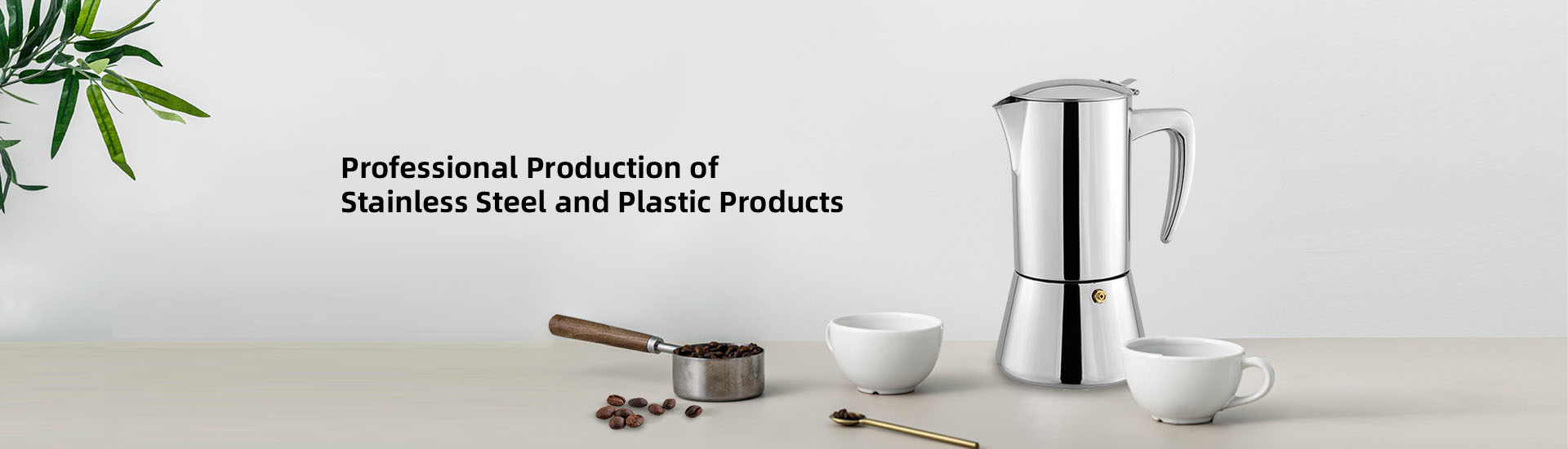
Pour over coffee maker demand stays strong because this product category combines clear brewing logic, premium presentation, and easier market positioning. For buyers building a coffee appliance line, pour over models offer a cleaner product story than many standard machines. The brewing process is visible, the structure is easier to understand, and the user experience is closely linked to water flow and temperature control. According to Specialty Coffee Association guidance, proper extraction is generally associated with water in the 92°C to 96°C range, which explains why precision and stability matter so much in this segment.
A pour over coffee maker fits both practical and commercial needs. It can be positioned as a household appliance, a premium gift item, or a retail-ready coffee solution with upgraded appearance and packaging. Compared with more complex machines, the structure is easier to optimize for heating performance, water distribution, and long-term maintenance. That gives more room for OEM coffee maker manufacturer projects, especially when buyers want to balance function, design, and cost. SELLWELL’s coffee appliance content highlights the importance of stable heating, water circulation, and leakage control during production, which directly supports the value of this category.
In pour over coffee maker sourcing, manufacturer vs trader is not a small detail. A direct factory has stronger control over heating element quality, material standards, mold precision, assembly consistency, and batch correction speed. A trader may offer product options, but stable mass production depends on internal engineering and process control. SELLWELL states that its factory was built in 1991, covers 60,000 square metres, employs 500 staff, and includes stainless steel and plastic production capability. This kind of integrated setup supports more reliable output for bulk supply programs.
A strong OEM and ODM process should go beyond logo printing and carton design. For this product, development usually includes appearance confirmation, heating system matching, water flow testing, brew performance review, safety verification, packaging validation, and final production approval. SELLWELL’s published coffee maker content emphasizes structured testing, internal quality calibration, and engineering support for customization. That is important when building differentiated products for wholesale programs, private label lines, and project-based sourcing.
For bulk orders, sample appearance is never enough. Buyers should review whether the factory can keep heating stability, water capacity accuracy, leakage resistance, and assembly consistency across repeated runs. A practical project sourcing checklist should include product structure, food-contact materials, electrical safety, voltage version, packaging method, compliance file, and production traceability. These points reduce risk after shipment and make repeat orders easier to manage. SELLWELL’s manufacturing articles repeatedly connect brewing reliability with standardized testing and material control, which is exactly what long-term supply programs need.
A reliable manufacturing process overview for a pour over coffee maker should include raw material inspection, plastic part molding, stainless steel component processing, heating system installation, water channel assembly, electrical function testing, leakage inspection, and final brew verification. Quality control checkpoints should focus on water circulation, heating performance, switch response, reservoir sealing, and finished product consistency. SELLWELL specifically notes water circulation testing, heating performance verification, brewing cycle checks, and leakage inspection in its coffee maker production content. These are the checkpoints that help one approved sample become a dependable production order.
Material standards used in coffee appliances affect both safety and durability. Heat-resistant plastic structures, stable stainless steel components, and consistent electrical parts all support better brewing and longer service life. On the compliance side, export market readiness also matters. SELLWELL states that the factory has passed ISO 9001:2015 and completed audits such as SMETA, BSCI, GMP, and SCAN. For buyers comparing suppliers, these records strengthen confidence in process management, factory discipline, and export market compliance.
| Item | Key checkpoint |
|---|---|
| Product structure | Water flow and filter fit |
| Heating system | Temperature stability |
| Material review | Food-contact safety |
| QC plan | Leakage and function tests |
| OEM details | Voltage, packaging, branding |
| Compliance file | Audit and quality records |
Why pour over coffee maker remains attractive is not only a question of coffee taste. It is also about product positioning, factory control, and scalable supply. SELLWELL combines long manufacturing history, integrated production capability, structured OEM and ODM support, and export-oriented quality management. For buyers looking at coffee appliance manufacturing from a long-term supply perspective, that combination gives this category stronger value and more dependable execution.
Previous: Why Use A French Press Coffee Maker

 WhatsApp:
 Phone:
 Contact Now