
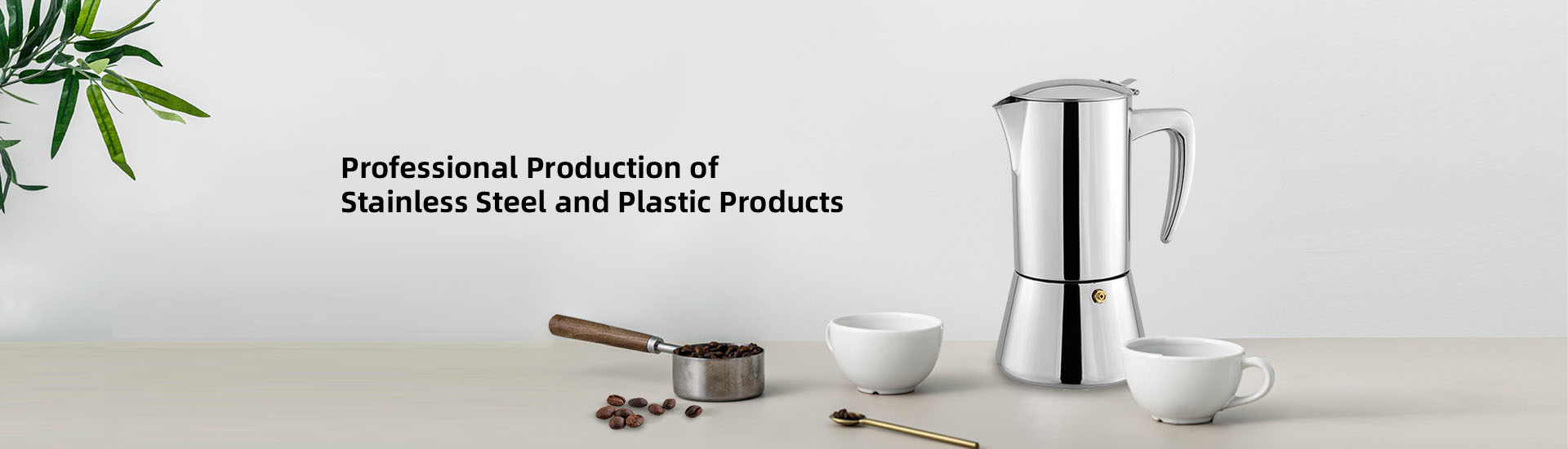
Product quality control is one of the most important factors that determines whether a kitchenware manufacturer can provide stable products for long-term supply. For stainless steel and plastic kitchen products, quality is not created only at the final inspection stage. It depends on every step from material selection, production process, assembly, testing, and shipment preparation.
SELLWELL focuses on stainless steel and plastic household product manufacturing, with its own stainless steel processing and plastic injection capabilities. The factory covers approximately 60,000㎡, employs more than 500 employees, and has established quality management systems including ISO 9001:2015 certification, as well as SMETA, BSCI, GMP, and SCAN audits. :contentReference[oaicite:0]{index=0}
The first step of quality control starts before production begins.
For stainless steel kitchenware, manufacturers need to verify:
Stainless steel grade
Material thickness
Surface condition
Chemical composition
Supplier consistency
Common materials used in kitchen products include 304 and 316 stainless steel because they provide good corrosion resistance and durability.
| Material Check | Quality Purpose |
|---|---|
| Stainless steel grade verification | Ensures correct material performance |
| Thickness measurement | Maintains product strength |
| Surface inspection | Prevents scratches and defects |
| Material documentation | Supports market compliance |
A reliable stainless steel kitchenware manufacturer should maintain clear material records and ensure that approved materials are used consistently during bulk production.
Kitchenware quality depends heavily on production stability.
A complete manufacturing process may include:
Stainless steel cutting
Metal forming
Welding
Polishing
Plastic injection molding
Component assembly
Functional testing
Final packaging
Each production stage requires specific inspection standards.
For example:
Forming inspection checks product shape and dimensions
Welding inspection ensures connection strength
Polishing inspection controls surface appearance
Assembly inspection verifies component matching
SELLWELL integrates stainless steel processing and plastic injection production, allowing different manufacturing stages to be coordinated within one factory system. :contentReference[oaicite:1]{index=1}
For customized kitchenware projects, quality control becomes even more important because products may include customized structures, materials, finishes, or packaging.
A professional OEM and ODM process usually includes:
| Stage | Quality Control Focus |
|---|---|
| Product development | Confirm design feasibility |
| Sample production | Verify structure and appearance |
| Approval stage | Confirm final specifications |
| Mass production | Maintain sample consistency |
| Shipment | Final product inspection |
Compared with a trader, a manufacturer can communicate directly with engineering and production teams, making it easier to solve issues during development and bulk manufacturing.
SELLWELL provides OEM and ODM services for products including coffee makers, Tea Makers, kitchen organizers, storage products, and household accessories, supporting customized production requirements. :contentReference[oaicite:2]{index=2}
A strong quality system does not depend only on final inspection. Problems should be identified as early as possible.
Important quality checkpoints include:
Incoming material inspection
First-piece production approval
Process inspection
Assembly testing
Finished product inspection
Packaging inspection
| Inspection Stage | Common Checks |
|---|---|
| Raw materials | Material specification |
| Metal processing | Size and shape accuracy |
| Surface treatment | Finish consistency |
| Assembly | Function and fitting |
| Final inspection | Appearance and performance |
This process reduces defective products, rework costs, and delivery risks during bulk supply.
Kitchen products need more than good appearance. They must perform reliably in daily use.
Quality testing may include:
Leakage testing
Strength testing
Opening and closing tests
Heat resistance testing
Functional operation checks
For products such as coffee makers, kettles, and kitchen containers, small production differences can affect user experience. Therefore, consistent testing standards are important for maintaining product reliability.
A reliable supplier should demonstrate:
Stable production capacity
Complete manufacturing processes
Experienced quality teams
Clear inspection procedures
Technical support capability
SELLWELL's manufacturing background includes stainless steel and plastic product production, supporting both standard products and customized projects. The company states that it works with global customers on OEM and ODM projects and focuses on continuous product development, quality improvement, and delivery reliability. :contentReference[oaicite:3]{index=3}
Kitchenware products sold internationally must meet different market requirements.
Quality management should consider:
Food contact material requirements
Product testing standards
Packaging regulations
Customer-specific compliance requirements
For example, the European Union requires food-contact materials to comply with Regulation EC No 1935/2004, ensuring materials do not transfer substances into food at levels that may affect consumer health.
A manufacturer with export experience can help reduce compliance risks and improve shipment reliability.
Before starting mass production, review:
| Category | Questions |
|---|---|
| Materials | Are material grades confirmed? |
| Manufacturing | Are key processes controlled internally? |
| Quality | Are inspection standards defined? |
| Customization | Can OEM and ODM requirements be supported? |
| Capacity | Can quality remain stable during bulk orders? |
| Compliance | Are export requirements understood? |
A professional kitchenware manufacturer controls quality through the entire production journey, from raw materials to finished products.
The strongest suppliers combine manufacturing capability, quality systems, engineering support, and export experience to deliver consistent products.
With integrated stainless steel processing, plastic injection capabilities, OEM and ODM experience, and established quality management systems, SELLWELL provides reliable kitchenware manufacturing solutions for global markets.

 WhatsApp:
 Phone:
 Contact Now