
OEM and ODM are two common manufacturing models used in the kitchenware industry, but they represent different approaches to product development and production. Understanding the difference helps companies choose the right cooperation method based on product goals, customization requirements, and market strategy.
For OEM kitchenware manufacturing, the supplier produces products based on provided designs and specifications. For ODM kitchenware manufacturing, the supplier participates earlier by providing product concepts, engineering support, and design improvements.
SELLWELL specializes in stainless steel and plastic household products, supporting both OEM and ODM projects with integrated manufacturing capabilities, including stainless steel processing and plastic injection production. The factory covers approximately 60,000㎡, employs more than 500 staff, and produces over US$30 million worth of products annually. :contentReference[oaicite:0]{index=0}
OEM stands for Original Equipment Manufacturing. In this model, the product concept, design requirements, specifications, or drawings are usually provided by the customer, while the manufacturer handles production.
The OEM process typically includes:
Product drawing review
Material confirmation
Prototype development
Sample approval
Mass production
Quality inspection
Packaging and shipment
OEM kitchenware projects are suitable when a company already has:
Product designs
Brand positioning
Technical specifications
Packaging requirements
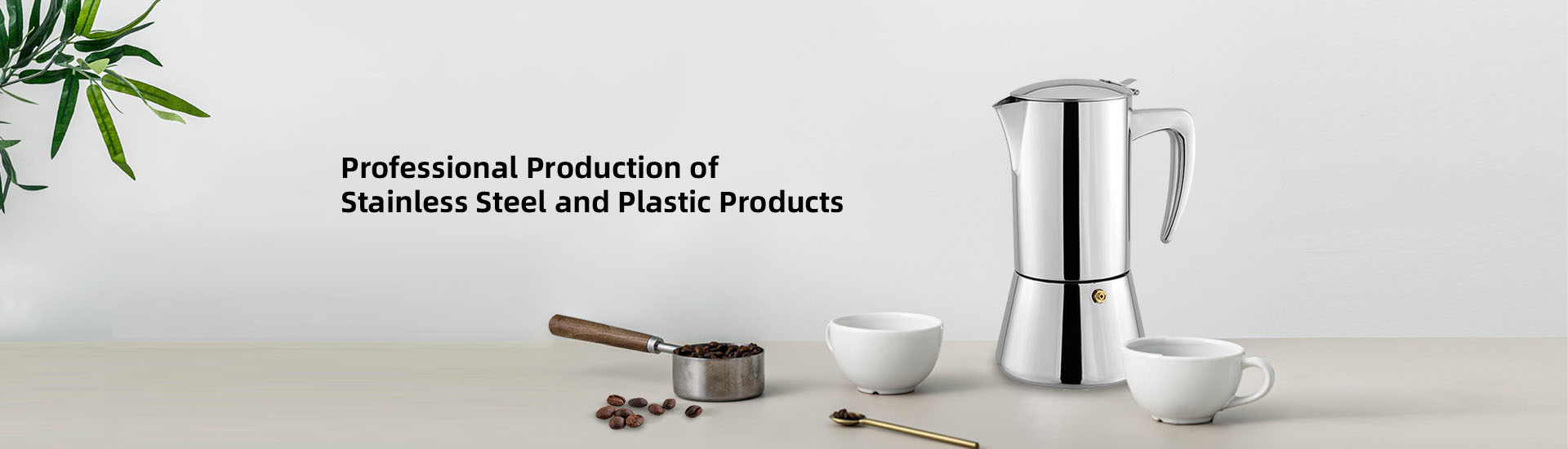
For example, a customer may provide a design for a stainless steel utensil set, coffee maker, or storage container, and the manufacturer completes material sourcing, processing, assembly, and production control.
ODM stands for Original Design Manufacturing. Unlike OEM, ODM suppliers participate in product development before mass production.
An ODM manufacturer may provide:
Existing product designs
Engineering suggestions
Structural improvements
Material recommendations
Prototype solutions
ODM is suitable for companies that want to develop new kitchen products but do not have complete internal product development resources.
SELLWELL works on OEM and ODM projects with international customers, including customized kitchen products, coffee makers, Tea Makers, kitchen organizers, and household accessories. :contentReference[oaicite:1]{index=1}
| Comparison | OEM Manufacturing | ODM Manufacturing |
|---|---|---|
| Product design | Provided by customer | Developed with manufacturer support |
| Engineering involvement | Production-focused | Development-focused |
| Customization level | Based on existing specifications | Includes design optimization |
| Development time | Usually shorter | Requires more development work |
| Product ownership | Customer design ownership | Manufacturer may provide original designs |
The right model depends on project requirements, market goals, and available product development resources.
Although OEM and ODM differ in development stages, both require strong manufacturing capability.
A professional kitchenware production process includes:
Stainless steel material inspection
Metal cutting and forming
Welding and polishing
Plastic injection molding
Component assembly
Functional testing
Final inspection
A manufacturer with integrated production capability can better control quality during both OEM and ODM projects.
SELLWELL operates its own stainless steel milling and plastic injection factories, allowing different production stages to be coordinated within one manufacturing system. :contentReference[oaicite:2]{index=2}
Material selection affects product performance, appearance, and market acceptance.
Common materials include:
| Material | Features | Applications |
|---|---|---|
| 304 Stainless Steel | Corrosion resistance and durability | Kitchen utensils, coffee products |
| 316 Stainless Steel | Higher corrosion resistance | Premium applications |
| Food-grade Plastic | Lightweight and flexible | Handles and accessories |
During ODM development, manufacturers can recommend suitable materials based on product function, cost targets, and destination market requirements.
During OEM production, material specifications are usually confirmed according to customer requirements.
Whether OEM or ODM, quality control is essential for stable bulk production.
Important checkpoints include:
| Production Stage | Inspection Focus |
|---|---|
| Raw materials | Material verification |
| Forming | Dimension accuracy |
| Surface treatment | Polishing consistency |
| Assembly | Component matching |
| Finished products | Function and appearance testing |
| Packaging | Shipment protection |
SELLWELL has passed ISO 9001:2015 certification and completed factory audits including SMETA, BSCI, GMP, and SCAN, demonstrating established quality management practices. :contentReference[oaicite:3]{index=3}
For large-volume kitchenware production, the supplier should have:
Stable production capacity
Reliable material supply
Consistent quality control
Experienced production teams
Efficient project management
A successful project requires more than producing the first sample. The manufacturer must maintain the same quality standards throughout repeated production batches.
A trader mainly focuses on product sourcing and communication, while a manufacturer controls production processes, engineering decisions, and quality management.
Working directly with a manufacturer provides advantages such as:
Faster technical communication
Better production visibility
Easier customization
More efficient problem solving
Stronger long-term supply stability
For OEM and ODM kitchenware projects, direct factory cooperation helps reduce unnecessary communication steps.
Before starting a kitchenware project, evaluate:
| Category | Key Questions |
|---|---|
| Product design | Is OEM or ODM support required? |
| Materials | Are specifications confirmed? |
| Manufacturing | Are production processes controlled? |
| Quality | Are inspection standards defined? |
| Capacity | Can bulk orders be delivered consistently? |
| Compliance | Can export requirements be supported? |
Food-contact kitchen products must also consider market regulations. For example, the European Union requires food-contact materials to comply with safety requirements under Regulation EC No 1935/2004.
OEM and ODM kitchenware manufacturing are not competing options. They serve different project requirements.
OEM is ideal when product designs and specifications are already available. ODM is better when additional design, engineering, and product development support are needed.
With stainless steel processing, plastic injection capability, OEM and ODM experience, and quality management systems, SELLWELL provides integrated kitchenware manufacturing solutions for global markets.

 WhatsApp:
 Phone:
 Contact Now