
Developing custom kitchenware products with a factory requires more than submitting a design and waiting for production. A successful project involves product planning, material selection, engineering evaluation, prototype development, manufacturing preparation, quality control, and export compliance.
For brands and businesses developing new kitchen products, choosing the right manufacturing partner determines whether the final product can achieve stable quality, reasonable cost, and reliable bulk production.
SELLWELL specializes in stainless steel and plastic household product manufacturing, supporting OEM and ODM projects through integrated production capabilities. The company operates a manufacturing facility covering approximately 60,000㎡ with more than 500 employees, providing stainless steel processing, plastic injection, assembly, and product development support. (sellwell-hk.com)
The first stage of custom kitchenware development is converting an idea into a clear product specification.
Before production begins, manufacturers need to confirm:
| Project Element | Key Information |
|---|---|
| Product function | Usage purpose and target application |
| Material | Stainless steel grade, plastic type, or other materials |
| Size | Dimensions and tolerance requirements |
| Appearance | Surface finish and design details |
| Packaging | Retail or shipping requirements |
| Market | Target country and compliance needs |
A detailed product brief reduces communication problems and prevents unnecessary design changes later.
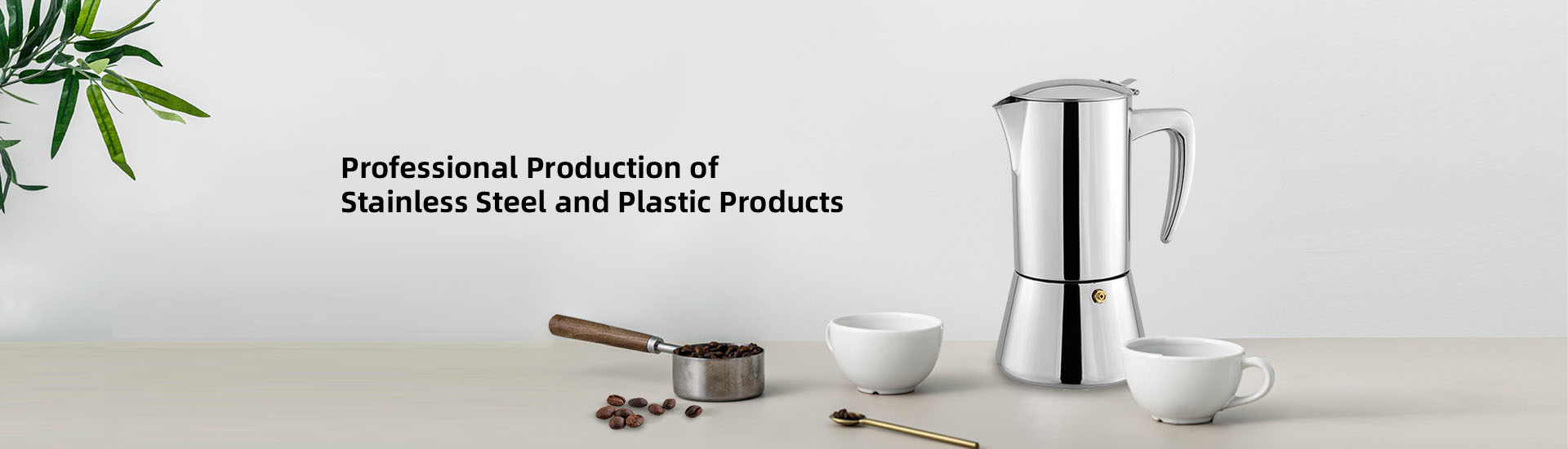
For example, developing a stainless steel coffee maker requires different considerations from creating a Kitchen Utensil Set because the structure, assembly process, and testing requirements are different.
The development model affects the entire project process.
| Model | Manufacturing Approach |
|---|---|
| OEM | Customer provides design and specifications, factory produces according to requirements |
| ODM | Factory provides design support and modifies existing solutions |
| Private Label | Existing products customized with branding and packaging |
OEM is suitable when the product concept, drawings, or specifications are already available.
ODM is suitable when additional support is needed for product design, engineering improvement, or manufacturing optimization.
Working directly with a manufacturer provides advantages compared with sourcing only through a trader because engineering teams can communicate directly about structure, materials, production feasibility, and cost control.
Material selection is one of the most important decisions during custom kitchenware development.
Common materials include:
| Material | Features | Application |
|---|---|---|
| 304 Stainless Steel | Corrosion resistance and durability | Kitchen utensils, containers, coffee products |
| 316 Stainless Steel | Higher corrosion resistance | Premium applications |
| Food-grade Plastic | Lightweight and flexible | Handles, accessories, organizers |
304 stainless steel is widely used in kitchen products because of its balance between corrosion resistance, processing performance, and cost efficiency.
A professional manufacturer should evaluate:
Product environment
Food contact requirements
Manufacturing process
Target market standards
Cost objectives
Selecting the wrong material at the beginning can increase production costs or create quality risks during mass production.
Before bulk manufacturing, prototype development helps verify whether the product design can be produced effectively.
The sample development process usually includes:
Design review
Engineering evaluation
Prototype production
Appearance inspection
Functional testing
Sample approval
During this stage, manufacturers evaluate:
Product structure
Assembly method
Material performance
Surface finish
Production feasibility
For customized products, sample approval is an important checkpoint because it becomes the reference standard for future bulk production.
After sample confirmation, the factory prepares production processes.
A typical custom kitchenware manufacturing process includes:
Stainless steel cutting
Metal forming
Welding
Polishing
Surface treatment
Plastic injection molding
Component assembly
Quality inspection
Packaging
Different products require different production methods.
For example:
| Product Type | Main Processes |
|---|---|
| Kitchen utensils | Cutting, forming, polishing, assembly |
| coffee makers | Metal processing, component assembly, function testing |
| Storage products | Stainless steel forming, plastic parts, packaging |
SELLWELL combines stainless steel manufacturing and plastic injection capabilities, allowing multiple production processes to be coordinated within one manufacturing system.
Quality control should start before mass production and continue throughout every manufacturing stage.
Important checkpoints include:
| Production Stage | Quality Focus |
|---|---|
| Raw materials | Verify material specifications |
| Forming | Check dimensions and structure |
| Welding | Confirm strength and appearance |
| Polishing | Maintain surface consistency |
| Assembly | Verify component matching |
| Final inspection | Check finished product quality |
SELLWELL has established quality management systems and has passed ISO 9001:2015 certification, together with factory audits including SMETA, BSCI, GMP, and SCAN.
A strong quality system helps ensure that mass-produced products remain consistent with approved samples.
Moving from samples to bulk production requires careful planning.
Before mass production, confirm:
Production quantity
Manufacturing schedule
Material availability
Packaging requirements
Inspection standards
Shipping arrangements
Bulk supply success depends on production stability rather than only producing a successful prototype.
A factory with complete manufacturing capability can better control:
Production efficiency
Quality consistency
Delivery schedules
Cost management
Custom kitchen products sold internationally must meet different market requirements.
Important considerations include:
Food contact material standards
Product testing
Packaging regulations
Labeling requirements
Export documentation
For example, the European Union requires food-contact materials to comply with Regulation EC No 1935/2004 to ensure materials do not transfer substances into food at levels that may affect consumer health.
Understanding compliance requirements during development helps avoid delays after production is completed.
Before starting a project, evaluate:
| Category | Questions |
|---|---|
| Design | Is OEM or ODM support required? |
| Material | Is the correct material grade selected? |
| Manufacturing | Can the factory control key processes? |
| Quality | Are inspection standards defined? |
| Capacity | Can bulk production be supported? |
| Compliance | Are export requirements understood? |
Developing custom kitchenware products requires cooperation between design, engineering, manufacturing, and quality control teams.
A reliable factory should not only produce products but also provide technical support throughout the development process.
With stainless steel processing, plastic injection capabilities, OEM and ODM experience, and established quality systems, SELLWELL supports customized kitchenware development from concept evaluation to bulk production for global markets.

 WhatsApp:
 Phone:
 Contact Now