
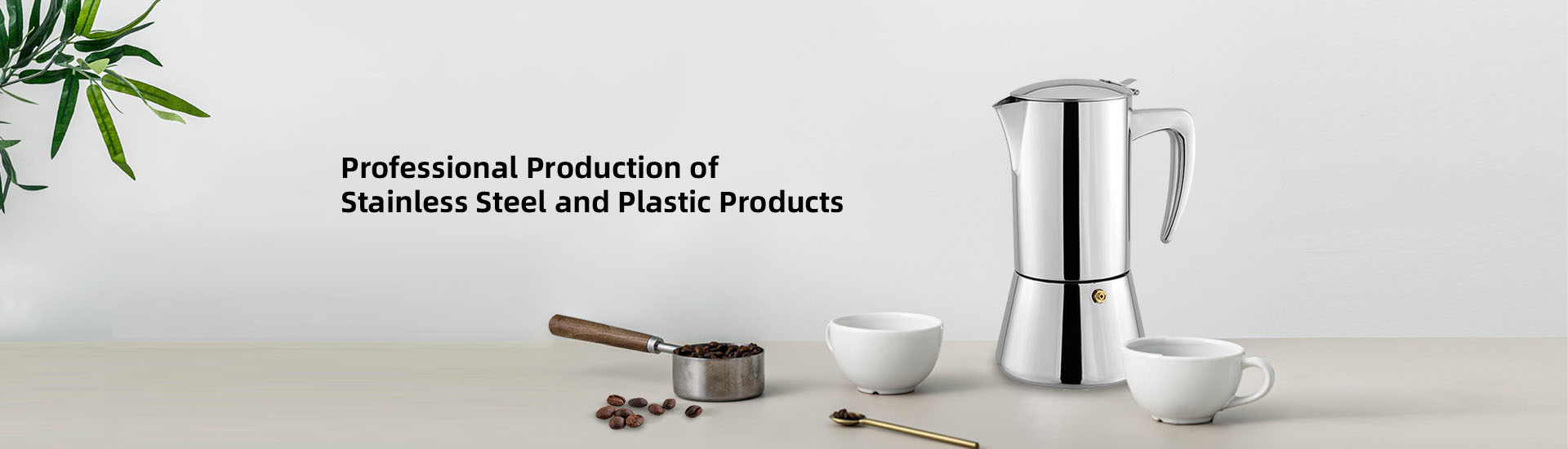
The production time for OEM kitchenware depends on product complexity, material selection, customization requirements, sample approval speed, production preparation, and quality inspection procedures. A simple modification of an existing product may require less time, while a completely new kitchen product with customized structure and tooling requires a longer development cycle.
A professional OEM kitchenware manufacturer should provide a clear production timeline covering design review, sample development, mass production, inspection, and shipment preparation.
SELLWELL specializes in stainless steel and plastic household product manufacturing, with its own stainless steel processing and plastic injection factories. The company operates a 60,000㎡ factory with more than 500 employees and supports OEM and ODM projects for global markets. :contentReference[oaicite:0]{index=0}
The total production cycle depends on whether the project uses an existing design or requires new product development.
| Production Stage | Typical Time Range | Main Activities |
|---|---|---|
| Project review | 3–7 days | Confirm requirements, materials, and specifications |
| Engineering evaluation | 1–3 weeks | Check production feasibility |
| Sample development | 2–6 weeks | Create and test prototypes |
| Customer approval | 1–3 weeks | Review samples and confirm details |
| Mass production | 30–60 days | Manufacturing and quality control |
| Inspection and shipment | 1–2 weeks | Final checking and export preparation |
The actual schedule may change depending on product structure, order quantity, and customization level.
For products already available in a manufacturer's catalog, production can move faster because many processes have already been established.
Existing products usually require:
Product specification confirmation
Logo or packaging adjustment
Sample approval
Production arrangement
Final inspection
For example, standard kitchen utensils, storage products, or existing coffee accessories may only require adjustments to branding, colors, or packaging.
SELLWELL offers a wide range of kitchen products, including coffee makers, Tea Makers, kitchen organizers, kettles, baking products, and barware collections. Many existing products can be adapted according to project requirements. :contentReference[oaicite:1]{index=1}
New OEM kitchenware products usually involve more development stages.
A complete development process includes:
Product concept discussion
Design review
Material selection
Engineering evaluation
Prototype development
Sample testing
Production preparation
Bulk manufacturing
The development time depends on:
| Factor | Production Impact |
|---|---|
| New structure design | Requires engineering evaluation |
| Custom mold | Adds tooling preparation time |
| Special materials | Requires testing and confirmation |
| Complex assembly | Increases production preparation |
| Custom packaging | Requires additional approval |
For ODM projects, manufacturers may also contribute product design ideas, structural improvements, and production solutions, which can influence the development timeline.
Material choice directly influences manufacturing preparation.
For stainless steel kitchenware, manufacturers need to confirm:
Stainless steel grade
Material thickness
Surface finish
Processing method
Food contact requirements
Common materials include:
| Material | Production Consideration |
|---|---|
| 304 Stainless Steel | Widely used and easier for standard production |
| 316 Stainless Steel | Requires higher material cost and control |
| Food-grade Plastic | Requires injection molding preparation |
A professional manufacturer evaluates materials before production to avoid delays caused by unsuitable specifications.
Different kitchen products require different manufacturing processes.
A typical stainless steel kitchenware production process includes:
Material preparation
Cutting
Forming
Welding
Polishing
Assembly
Quality inspection
Packaging
Products with more components usually require more production coordination.
For example:
| Product Type | Process Complexity |
|---|---|
| Stainless steel utensils | Medium |
| storage containers | Medium |
| coffee makers | Higher due to assembly and function testing |
| Kitchen organizers with plastic parts | Requires multiple processes |
SELLWELL combines stainless steel processing and plastic injection capabilities, allowing different manufacturing processes to be managed within an integrated production system. :contentReference[oaicite:2]{index=2}
Quality inspection is necessary for stable bulk production.
A reliable manufacturing process includes:
| Quality Checkpoint | Inspection Focus |
|---|---|
| Raw materials | Verify material specifications |
| Prototype stage | Confirm design accuracy |
| Production stage | Monitor consistency |
| Assembly stage | Check component matching |
| Final inspection | Verify finished product quality |
Skipping quality checks may shorten production time temporarily but can create greater risks during bulk orders.
SELLWELL has passed ISO 9001:2015 certification and conducted audits including SMETA, BSCI, GMP, and SCAN, supporting structured production and quality management. :contentReference[oaicite:3]{index=3}
Large-volume OEM orders need careful scheduling before manufacturing starts.
Before bulk production, manufacturers should confirm:
Order quantity
Production capacity
Material availability
Packaging requirements
Inspection standards
Shipping schedule
A manufacturer with stable production capability can better control delivery time because materials, processes, and quality procedures are already organized.
Working directly with a manufacturer can improve communication efficiency.
A manufacturer can directly manage:
Engineering discussions
Production adjustments
Quality problems
Delivery planning
Compared with a trader coordinating different suppliers, direct factory communication reduces unnecessary information transfer and makes project adjustments faster.
For OEM and ODM kitchenware projects, manufacturing capability is often more important than only comparing quoted lead times.
Before starting a project, confirm:
| Category | Key Questions |
|---|---|
| Design | Is the product existing or newly developed? |
| Materials | Are specifications confirmed? |
| Samples | Is approval completed? |
| Production | Is factory capacity available? |
| Quality | Are inspection standards defined? |
| Export | Are compliance documents prepared? |
The production time of OEM kitchenware depends on many connected factors, including design complexity, materials, manufacturing process, quality control, and order quantity.
A reliable OEM kitchenware manufacturer should not only provide products but also manage the complete development process from concept to shipment.
With integrated stainless steel manufacturing, plastic injection capabilities, OEM and ODM experience, and quality management systems, SELLWELL supports efficient and stable kitchenware production for international markets.
Previous:
Next: How to Choose the Right Stainless Steel Grade for Kitchenware?

 WhatsApp:
 Phone:
 Contact Now