
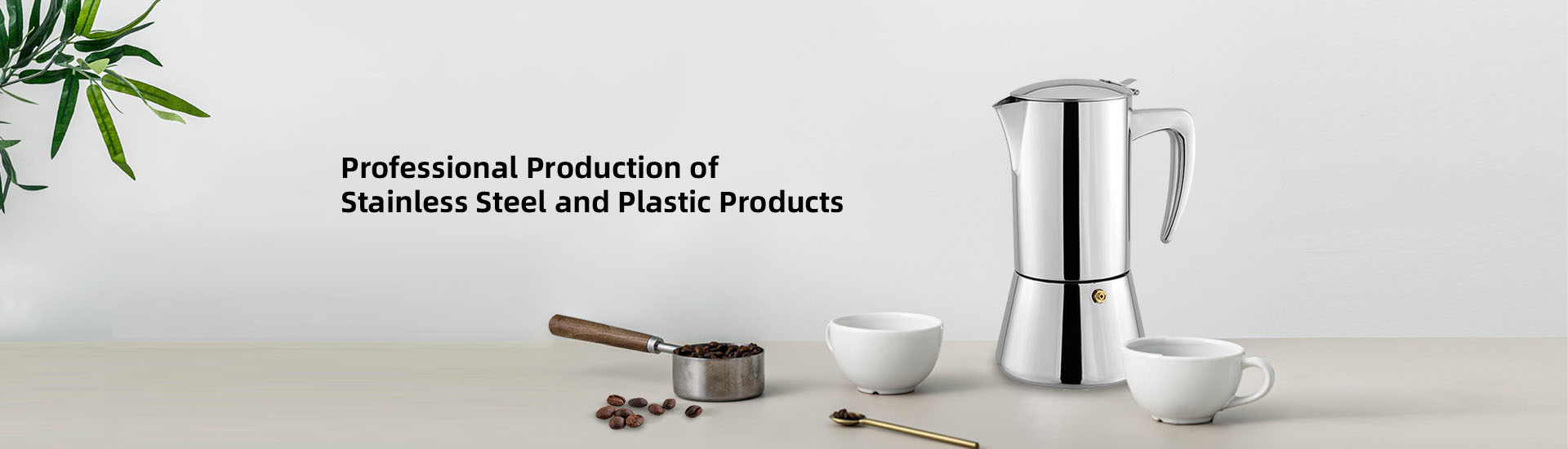
Surface finishing is an important part of stainless steel product manufacturing because it directly affects appearance, durability, cleaning performance, and market positioning. For kitchenware, household products, and customized stainless steel items, choosing the right finish helps improve both product value and user experience.
A professional stainless steel kitchenware manufacturer considers surface finishing during the product development stage, not only after production. The selected finish should match the product function, target market, material characteristics, and quality requirements.
SELLWELL specializes in stainless steel and plastic household product manufacturing, with stainless steel processing capabilities covering forming, polishing, assembly, and quality inspection. The company supports OEM and ODM projects for kitchen products with different appearance and functional requirements.
Stainless steel already provides excellent corrosion resistance and durability, but the surface condition determines the final product performance.
Surface finishing can improve:
Product appearance
Surface smoothness
Fingerprint resistance
Scratch visibility
Cleaning convenience
Brand presentation
According to stainless steel industry guidelines, finishes such as brushed, polished, satin, and mirror finishes are created through controlled mechanical processes using different abrasive methods and finishing techniques. The final appearance depends on abrasive type, processing pressure, and finishing control. :contentReference[oaicite:0]{index=0}
Different products require different finishing solutions.
| Surface Finish | Appearance | Common Applications |
|---|---|---|
| Brushed Finish | Matte surface with directional lines | Kitchen appliances, utensils, household products |
| Mirror Polish | Highly reflective surface | Premium kitchen products and decorative items |
| Satin Finish | Soft low-gloss appearance | Commercial and household applications |
| Electropolishing | Smooth and clean surface | High hygiene applications |
Brushed finishing is one of the most common methods for stainless steel products.
The process uses abrasive belts or pads to create a consistent linear texture on the metal surface. This creates a satin appearance while reducing the visibility of fingerprints and minor scratches. :contentReference[oaicite:1]{index=1}
Advantages include:
Modern appearance
Easier daily maintenance
Better scratch hiding ability
Suitable for mass production
Brushed finishes are commonly used for:
Kitchen utensils
Appliance panels
Household accessories
For oem kitchenware projects, brushed finishing is often selected because it provides a balance between appearance, durability, and production efficiency.
Mirror polishing creates a highly reflective stainless steel surface.
The process usually involves multiple polishing stages with increasingly finer abrasives, followed by buffing to achieve a smooth reflective appearance. Stainless steel industry standards classify bright polished mirror surfaces as No. 8 finish, which is produced through progressive polishing and fine buffing processes. :contentReference[oaicite:2]{index=2}
Mirror polishing is suitable for products requiring:
Premium visual appeal
Smooth touch feeling
High-end presentation
However, mirror finishes require stricter process control because fingerprints, scratches, and surface defects are easier to notice.
Satin finishing creates a soft, low-reflection surface between brushed and polished finishes.
Compared with mirror polishing, satin finishes are easier to maintain because they do not show fingerprints as easily. Compared with rougher finishes, they provide a smoother appearance.
| Feature | Satin Finish |
|---|---|
| Appearance | Soft and elegant |
| Maintenance | Easy cleaning |
| Surface reflection | Low |
| Application | Kitchen products and household items |
This finish is often selected for products that need both practical performance and attractive appearance.
Electropolishing is an electrochemical surface treatment method that improves stainless steel surface smoothness.
It removes a thin surface layer and can reduce microscopic irregularities, making the surface easier to clean.
Typical applications include products requiring:
Higher hygiene standards
Smooth surface performance
Reduced contamination risk
For general kitchenware production, mechanical polishing and brushing remain the most common finishing methods because they provide good appearance and production efficiency.
Surface finishing quality depends on more than the finishing method itself.
A reliable manufacturing process should control:
| Production Stage | Quality Check |
|---|---|
| Material preparation | Verify stainless steel specification |
| Forming process | Prevent surface damage |
| Polishing | Maintain consistent appearance |
| Cleaning | Remove processing residue |
| Final inspection | Check scratches and finish uniformity |
During mass production, maintaining consistent surface appearance is especially important because customers expect every product in the same order to have matching finishes.
For customized stainless steel products, surface finishing should be confirmed during product development.
Important considerations include:
Product application
Target market positioning
Cleaning requirements
Production cost
Packaging protection
During OEM and ODM development, manufacturers usually confirm:
Product design requirements
Surface finish sample
Production method
Inspection standard
Final approval
A manufacturer with internal finishing capability can adjust production processes more efficiently compared with a trader coordinating different suppliers.
Different finishing methods require different levels of processing.
| Finishing Method | Cost Influence |
|---|---|
| Standard brushed finish | Moderate |
| Fine satin finish | Higher processing control |
| Mirror polishing | Higher labor and inspection requirements |
| Special surface treatment | Depends on process complexity |
The cost difference comes from processing time, equipment requirements, labor skills, and quality inspection standards.
The stainless steel grade also affects finishing results.
Common materials include:
| Material | Finishing Consideration |
|---|---|
| 304 Stainless Steel | Suitable for most kitchen products |
| 316 Stainless Steel | Used where higher corrosion resistance is needed |
| 430 Stainless Steel | Cost-effective option for selected applications |
Choosing the right material before finishing helps ensure the final product meets durability and appearance expectations.
Before production, evaluate:
| Category | Questions |
|---|---|
| Product use | Is the finish suitable for the application? |
| Appearance | Is the surface style clearly defined? |
| Material | Is the stainless steel grade confirmed? |
| Quality | Are inspection standards established? |
| Production | Can the finish remain consistent in bulk orders? |
Surface finishing is not only about appearance. It affects product durability, maintenance, manufacturing consistency, and market value.
A professional stainless steel kitchenware manufacturer should provide technical support in material selection, finishing method evaluation, production control, and quality inspection.
With stainless steel processing capabilities, OEM and ODM experience, and established quality management systems, SELLWELL provides customized stainless steel product manufacturing solutions for global markets.

 WhatsApp:
 Phone:
 Contact Now