
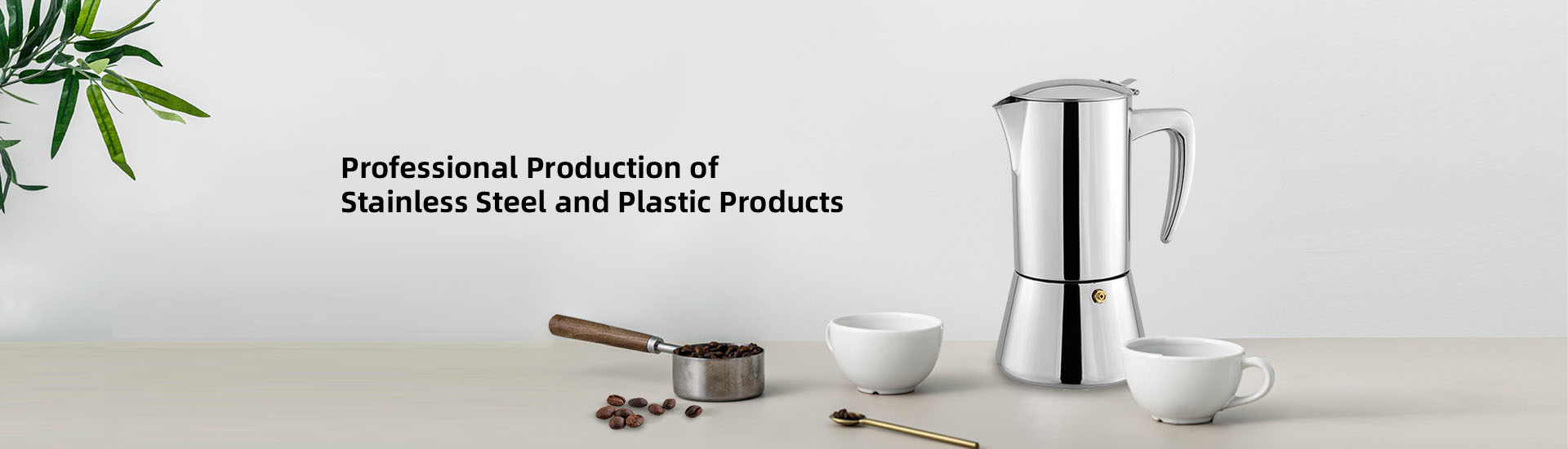
The production of stainless steel kettles involves multiple manufacturing stages, from material selection and metal forming to polishing, assembly, testing, and final packaging. A high-quality kettle is not created by stainless steel material alone. It requires precise process control, skilled manufacturing, and strict quality inspection at every stage.
Stainless steel is widely used in kettle manufacturing because of its corrosion resistance, durability, and suitability for contact with water. The material itself is produced from alloys containing elements such as iron, chromium, nickel, and other components. Chromium content helps stainless steel form a protective passive layer that improves rust resistance. :contentReference[oaicite:0]{index=0}
SELLWELL specializes in stainless steel and plastic household product manufacturing, supporting OEM and ODM projects with integrated capabilities including stainless steel processing, plastic injection molding, assembly, and quality control management.
The manufacturing journey begins with selecting suitable stainless steel sheets.
For kettle production, manufacturers usually evaluate:
| Material Factor | Quality Impact |
|---|---|
| Stainless steel grade | Determines corrosion resistance and durability |
| Material thickness | Affects strength and product lifespan |
| Surface condition | Influences final appearance |
| Material consistency | Ensures stable mass production |
Common materials include:
| Material | Characteristics | Application |
|---|---|---|
| 304 Stainless Steel | Good corrosion resistance and food-contact performance | Household kettles |
| 316 Stainless Steel | Higher corrosion resistance | Premium applications |
| 430 Stainless Steel | Cost-efficient option | Selected products |
Before production, manufacturers confirm material specifications to ensure the final kettle meets durability and safety requirements.
The flat stainless steel sheet must first be transformed into the three-dimensional kettle body.
The forming process usually includes:
Material cutting
Blanking
Deep drawing
Trimming
Shape adjustment
Deep drawing and stamping processes use specialized molds to gradually shape flat stainless steel sheets into the kettle body, lid, or other components. :contentReference[oaicite:1]{index=1}
During this stage, manufacturers control:
Product dimensions
Body thickness
Structural strength
Surface deformation
Accurate forming is important because even small dimensional differences can affect assembly and product appearance.
After forming, different stainless steel components are combined through welding and assembly.
Main processes include:
Body welding
Spout installation
Handle connection
Lid assembly
Base fitting
| Assembly Stage | Quality Focus |
|---|---|
| Welding | Joint strength and appearance |
| Handle installation | Stability and safety |
| Lid assembly | Proper opening and closing |
| Base connection | Secure fitting |
For electric kettles, additional components such as heating elements, thermostats, and power bases require precise assembly and functional verification. :contentReference[oaicite:2]{index=2}
Surface treatment determines the final appearance and user experience of stainless steel kettles.
Common finishing methods include:
| Finish | Features |
|---|---|
| Brushed Finish | Modern appearance with reduced fingerprint visibility |
| Mirror Polish | Premium reflective surface |
| Satin Finish | Smooth and elegant appearance |
Polishing usually involves multiple stages using different abrasive materials to remove surface imperfections and achieve the required finish. :contentReference[oaicite:3]{index=3}
Quality control during polishing focuses on:
Surface consistency
Scratch prevention
Brightness uniformity
Finish matching between batches
For OEM and ODM projects, the approved surface finish sample becomes an important reference for bulk production.
Many stainless steel kettles combine metal bodies with plastic components.
Common plastic parts include:
Handles
Lids
Switch covers
Base components
These parts are usually produced through plastic injection molding.
The manufacturing process includes:
Plastic material preparation
Mold injection
Cooling and shaping
Component inspection
Assembly preparation
A manufacturer with both stainless steel processing and plastic injection capability can better coordinate product quality and production efficiency.
Quality control is integrated throughout the manufacturing process.
A complete inspection system includes:
| Inspection Stage | Testing Items |
|---|---|
| Raw material | Stainless steel grade verification |
| Forming | Dimension accuracy |
| Welding | Joint strength |
| Polishing | Surface quality |
| Assembly | Component matching |
| Final testing | Product performance |
For electric kettles, manufacturers may also perform:
Heating function testing
Leakage testing
Electrical safety testing
Temperature control testing
Appearance inspection
A professional manufacturer does not only inspect finished products. It controls quality from the beginning of production.
For customized kettle projects, the development process usually starts with product requirements and sample confirmation.
The OEM and ODM workflow includes:
| Stage | Main Activities |
|---|---|
| Requirement review | Confirm design and specifications |
| Engineering evaluation | Check production feasibility |
| Prototype development | Produce samples |
| Sample approval | Confirm final standards |
| Bulk production | Manufacture according to approved samples |
Working directly with a manufacturer allows faster communication between engineering teams and production teams compared with suppliers that rely on external factories.
After approval, the factory moves into mass production.
Before shipment, manufacturers check:
Production quantity
Product appearance
Packaging quality
Documentation
Export requirements
Export markets may require different standards depending on product type and destination.
For food-contact stainless steel products, markets such as the European Union require compliance with food-contact material regulations, including Regulation EC No 1935/2004, to ensure materials are safe for consumer use.
Before selecting a supplier, evaluate:
| Category | Key Questions |
|---|---|
| Material | Is the stainless steel grade confirmed? |
| Manufacturing | Are forming and assembly processes controlled? |
| Quality | Are inspection checkpoints established? |
| Customization | Can OEM and ODM requirements be supported? |
| Capacity | Can bulk orders maintain consistency? |
| Compliance | Are export requirements understood? |
Producing stainless steel kettles requires a complete manufacturing system covering material selection, forming, welding, polishing, assembly, testing, and export preparation.
A reliable stainless steel kettle manufacturer should provide not only production capacity but also engineering support, quality control, and stable bulk supply capability.
With stainless steel processing, plastic injection molding, OEM and ODM experience, and established quality management systems, SELLWELL provides integrated kettle and kitchen product manufacturing solutions for global markets.

 WhatsApp:
 Phone:
 Contact Now