
A one stop kitchenware supplier provides more than product manufacturing. By integrating product development, material sourcing, production, quality control, packaging, and export support into one system, manufacturers can help simplify the entire supply process and improve project efficiency.
For customized kitchen products, working with multiple suppliers often creates challenges in communication, quality consistency, and production coordination. A supplier with complete manufacturing capabilities can reduce these difficulties by managing different stages under one quality system. Industry discussions on OEM and ODM manufacturing highlight that suppliers offering design support, sample production, mass manufacturing, inspection, and packaging services can provide a more efficient product development route. :contentReference[oaicite:0]{index=0}
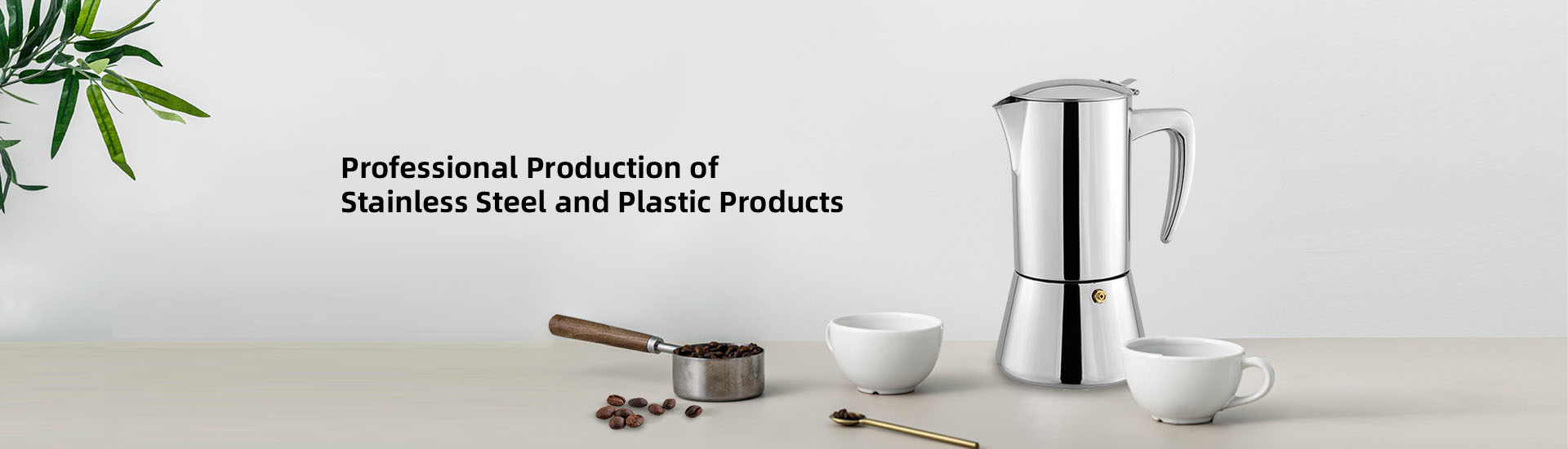
SELLWELL specializes in stainless steel and plastic household product manufacturing, with integrated capabilities covering stainless steel processing, plastic injection molding, assembly, and quality management. The company supports OEM and ODM projects for kitchenware, coffee products, Tea Makers, storage products, and household accessories.
One of the biggest advantages of working with a one stop supplier is simplified project communication.
When different suppliers handle different stages, companies may need to coordinate:
Product design
Material purchasing
Component production
Assembly
Packaging
Quality inspection
Shipping preparation
A single manufacturing partner can connect these processes together.
| Traditional Multi-Supplier Model | One Stop Manufacturing Model |
|---|---|
| Multiple communication channels | One project contact |
| Different quality standards | Unified inspection system |
| Separate production schedules | Coordinated production planning |
| Higher management workload | Simplified project control |
For oem kitchenware projects, direct communication between engineering, production, and quality teams helps solve problems faster and reduces delays caused by information transfer.
A strong one stop kitchenware supplier should support products from concept to mass production.
The development process usually includes:
Product requirement review
Design evaluation
Material selection
Prototype development
Sample approval
Mass production
Quality inspection
Packaging and shipment
OEM and ODM models provide different development approaches. OEM focuses on producing according to customer specifications, while ODM allows manufacturers to provide product design and development support. :contentReference[oaicite:1]{index=1}
| Development Model | Main Advantage |
|---|---|
| OEM | Higher customization control |
| ODM | Faster product development |
| Private Label | Faster market entry |
A supplier with both OEM and ODM capability can support different project requirements.
Kitchenware quality depends heavily on material selection.
A one stop manufacturer can directly control:
Stainless steel selection
Plastic material standards
Component matching
Production specifications
Quality documentation
Common materials include:
| Material | Application |
|---|---|
| 304 Stainless Steel | Kitchen utensils, containers, coffee products |
| 316 Stainless Steel | Premium corrosion-resistant applications |
| Food-grade Plastic | Handles, accessories, storage products |
When material purchasing, processing, and quality inspection are managed within the same manufacturing system, product consistency becomes easier to maintain during bulk production.
A professional one stop kitchenware supplier should have control over key manufacturing stages.
A typical production process includes:
Raw material inspection
Stainless steel cutting
Metal forming
Welding
Polishing
Plastic injection molding
Assembly
Functional testing
Final inspection
Packaging
| Production Stage | Quality Focus |
|---|---|
| Material preparation | Confirm specifications |
| Metal processing | Maintain dimensions |
| Surface treatment | Ensure appearance consistency |
| Assembly | Verify component matching |
| Final inspection | Confirm product quality |
SELLWELL combines stainless steel processing and plastic injection capabilities, allowing multiple production processes to be coordinated within one factory system.
Quality control becomes more efficient when one supplier manages the complete production chain.
Important checkpoints include:
| Inspection Stage | Testing Focus |
|---|---|
| Incoming materials | Material verification |
| Production process | Process stability |
| Surface treatment | Appearance inspection |
| Assembly | Product function |
| Final inspection | Shipment approval |
SELLWELL has established quality management systems and passed ISO 9001:2015 certification, together with factory audits including SMETA, BSCI, GMP, and SCAN.
A unified quality system helps maintain stable standards across different product batches.
For large-volume kitchenware projects, production coordination directly affects delivery performance.
A one stop supplier can better manage:
Production schedules
Raw material preparation
Manufacturing capacity
Packaging requirements
Shipment planning
| Supply Management Area | One Stop Supplier Advantage |
|---|---|
| Materials | Centralized purchasing control |
| Production | Better scheduling |
| Quality | Unified standards |
| Delivery | Easier coordination |
This is especially important for seasonal products or large product collections that require multiple items to be delivered together.
Working with multiple suppliers may create additional costs from:
Repeated communication
Separate quality inspections
Additional logistics coordination
Production adjustments
Supplier management time
A one stop manufacturing partner can help optimize the total project cost by integrating different services.
The value is not only reflected in product pricing but also in:
Faster problem solving
Lower management effort
Better production visibility
More stable quality
International kitchenware projects require attention to different market standards.
A professional supplier should understand:
Food contact material requirements
Product testing standards
Packaging regulations
Export documentation
For example, food-contact products entering the European Union must comply with Regulation EC No 1935/2004 to ensure materials are safe for consumer use.
A supplier with export experience can help prepare appropriate documentation and reduce compliance risks.
A trader mainly focuses on sourcing products from different factories, while a manufacturer controls production processes directly.
A direct one stop manufacturer can provide:
Engineering support
Production transparency
Quality control
Customization flexibility
Faster technical communication
For OEM and odm kitchenware projects, direct factory cooperation usually provides better control over product development and manufacturing results.
Before selecting a manufacturing partner, review:
| Category | Questions |
|---|---|
| Product development | Can OEM and ODM support be provided? |
| Materials | Are standards clearly controlled? |
| Manufacturing | Are key processes managed internally? |
| Quality | Are inspection systems established? |
| Capacity | Can bulk orders be supported? |
| Compliance | Is export experience available? |
The advantage of a one stop kitchenware supplier is not simply offering more products. It is the ability to connect design, engineering, manufacturing, quality control, and export support into one efficient process.
A reliable supplier helps reduce project complexity while improving product consistency and production reliability.
With stainless steel processing, plastic injection molding, OEM and ODM experience, and established quality systems, SELLWELL provides integrated kitchenware manufacturing solutions for global markets.

 WhatsApp:
 Phone:
 Contact Now