
french press coffee makers offer wider market accessibility and simpler production, while espresso makers target premium coffee segments with higher technical requirements. Market potential depends on positioning, application, and customer needs.
French press coffee makers and espresso makers create different coffee experiences through different brewing methods.
A french press coffee maker uses immersion brewing, where coffee grounds are steeped in hot water before being separated through a metal filter. It features a simple structure, easy operation, and broad consumer acceptance.
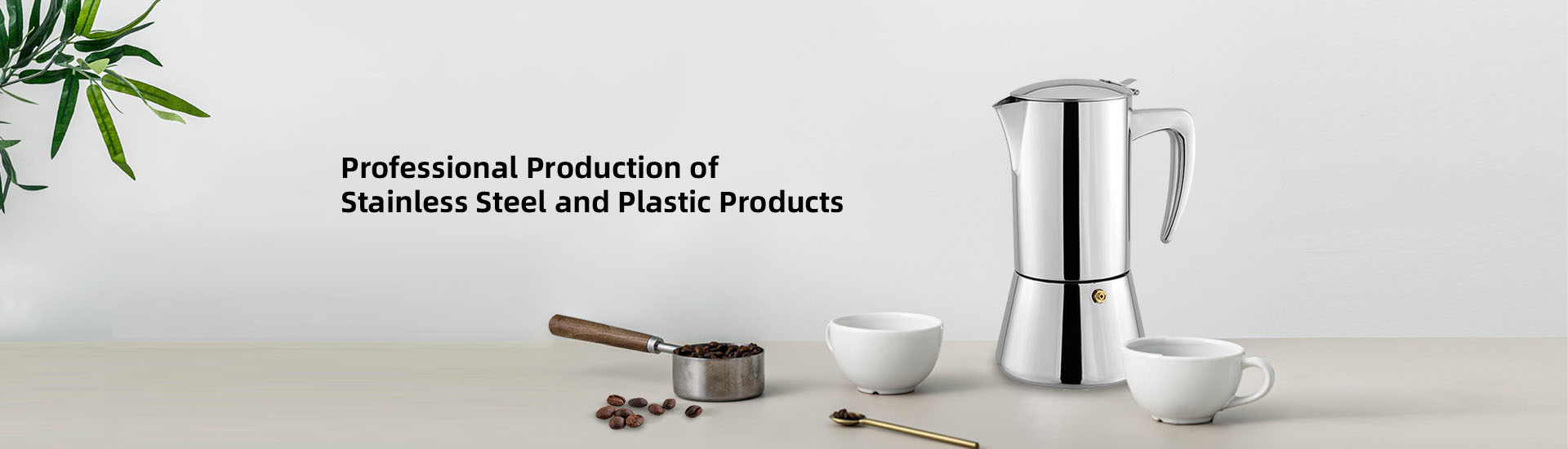
An espresso maker uses high-pressure extraction to produce concentrated coffee with rich flavor and crema. Espresso systems require more complex components, precise pressure control, and advanced manufacturing processes.
For coffee product manufacturers, these differences affect product design, production complexity, target markets, and customization opportunities.
A French press coffee maker uses a straightforward brewing process.
The typical operation includes:
Adding coarse coffee grounds into the container
Pouring hot water for extraction
Waiting for brewing completion
Pressing the filter to separate coffee grounds
Its simple structure makes it suitable for a wide range of consumers.
From a manufacturing perspective, French press coffee makers focus on:
Durable container materials
Reliable filter systems
Comfortable handles
Easy cleaning
Stable product structure
The relatively simple design also provides flexibility for customization and mass production.
An espresso maker uses pressure-based extraction technology.
The brewing process requires:
Pressurized water flow
Precise temperature control
Controlled extraction time
Specialized brewing components
Espresso makers generally involve more complex engineering compared with French press designs.
Manufacturing considerations include:
Pressure system reliability
Component precision
Heat management
Safety performance
Long-term operational stability
These requirements make espresso products more technically demanding.
Both products have strong market opportunities but serve different consumer groups.
| Comparison Factor | French Press Coffee Maker | Espresso Maker |
|---|---|---|
| Product Complexity | Simple structure | More complex system |
| Target Users | General coffee consumers | Coffee enthusiasts and professionals |
| Price Positioning | Entry to mid-range | Mid to premium range |
| Manufacturing Difficulty | Lower | Higher |
| Customization Flexibility | High | Depends on technology requirements |
| Market Accessibility | Wider consumer base | More specialized market |
French press coffee makers generally reach broader markets, while espresso makers create opportunities in premium segments.
French press coffee makers are popular because they provide an easy coffee experience without requiring complex equipment.
Market advantages include:
Simple brewing process
Affordable product positioning
Easy maintenance
Suitable for home use
Lower learning requirements
These characteristics make French press coffee makers suitable for:
Household markets
Office environments
Gift product categories
Lifestyle retail channels
For manufacturers, the simpler structure also supports efficient production and flexible customization.
Espresso makers appeal to consumers who value professional coffee experiences.
Their market advantages include:
Premium coffee preparation
Specialty coffee applications
Higher product value perception
Strong connection with coffee culture
Espresso products are commonly used in:
Cafes
Restaurants
Hotels
Premium home coffee markets
However, higher technical requirements mean manufacturers need stronger engineering and quality control capabilities.
French press coffee makers usually provide easier customization because their structure allows more flexibility.
Customization options may include:
Container materials
Handle designs
Filter structures
Surface finishes
Product capacity
Packaging solutions
Espresso makers can also be customized, but changes often involve more complex considerations related to internal systems and performance requirements.
French press coffee makers usually provide higher manufacturing efficiency because they have fewer components and simpler assembly processes.
Production advantages include:
Shorter development cycles
Easier quality management
Lower production complexity
Flexible order quantities
Espresso makers require more detailed production management due to pressure systems, electrical components, and performance testing.
Different coffee products require different manufacturing expertise.
Important capabilities include:
Stainless steel processing
Product structure development
Surface treatment
Component assembly
Quality inspection
OEM and ODM support
For stainless steel coffee products, manufacturing processes such as forming, welding, polishing, and finishing influence product quality and appearance.
The answer depends on market strategy.
French press coffee makers provide advantages through wider customer reach, easier production, and flexible market applications.
Espresso makers provide advantages through premium positioning, higher technical value, and professional coffee market demand.
For manufacturers and brands, selecting between these products requires understanding target customers, production capabilities, and desired market position.
French press coffee makers generally provide broader market potential due to their simplicity, affordability, and wider consumer applications. Espresso makers offer strong opportunities in premium and professional coffee segments.
A balanced coffee product strategy can include both designs to serve different market demands and create broader product opportunities.

 WhatsApp:
 Phone:
 Contact Now