
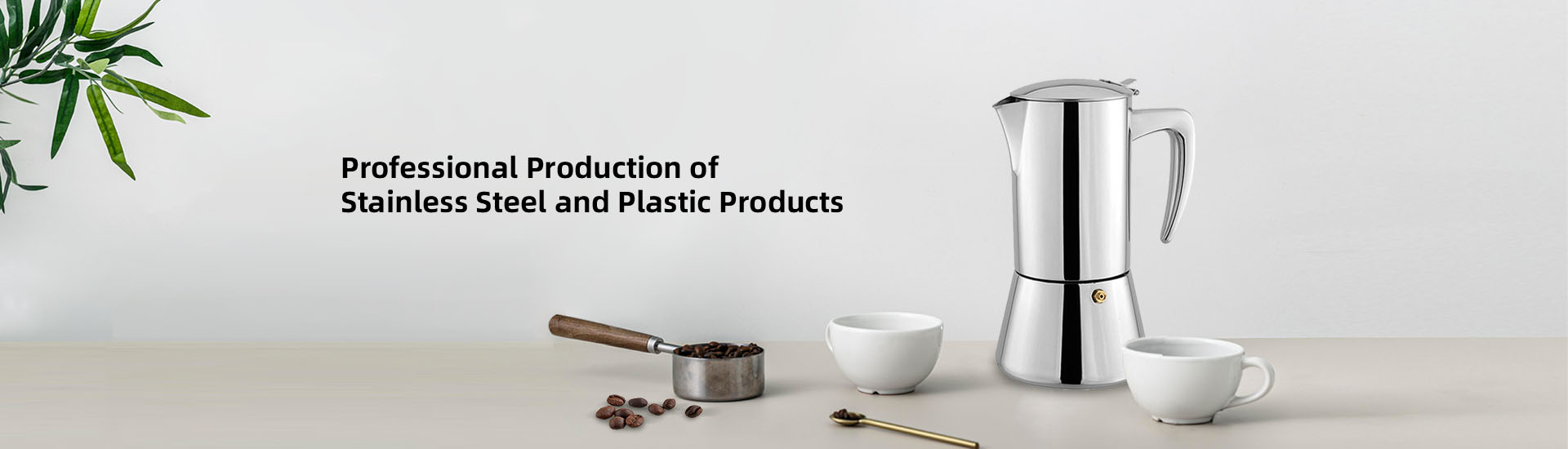
OEM kitchenware manufacturers provide stronger value through direct production control, customization support, and technical expertise, while trading suppliers offer convenience and wider sourcing options. The better partner depends on brand goals and supply requirements.
OEM kitchenware manufacturers and trading suppliers provide different approaches to product sourcing.
An OEM kitchenware manufacturer directly manages production processes, including product development, material selection, manufacturing, quality control, and customization.
A trading supplier acts as an intermediary between buyers and factories. They help customers source products from different manufacturers and provide purchasing convenience.
For brands, choosing between these partners affects product quality control, customization ability, communication efficiency, and long-term supply relationships.
OEM manufacturers provide value through direct control over product development and production.
Their advantages include:
Direct factory communication
Customized product development
Better production transparency
Stronger quality control
Technical manufacturing support
Manufacturers can support brands with:
Product design adjustments
Material recommendations
Prototype development
Production optimization
Packaging customization
For stainless steel kitchenware, direct manufacturing experience helps ensure product durability, appearance, and consistency.
Trading suppliers provide value through convenience and sourcing flexibility.
Their advantages include:
Access to multiple product categories
Simplified purchasing process
Lower supplier management effort
Faster product selection
Trading suppliers can be suitable for businesses that:
Need various product types
Prefer one purchasing contact
Require quick sourcing solutions
Do not need deep customization
The differences can be seen across several areas.
| Comparison Factor | OEM Kitchenware Manufacturer | Trading Supplier |
|---|---|---|
| Production Control | Direct control | Depends on factories |
| Customization | High flexibility | Usually limited |
| Communication | Direct with production team | Through intermediary |
| Quality Management | Factory-level control | Supplier coordination |
| Product Development | Strong support | Limited technical input |
| Product Range | Based on manufacturing capability | Wider sourcing range |
The right choice depends on whether customization or sourcing convenience is the priority.
OEM manufacturers usually provide stronger support for customized products.
Customization options may include:
Product dimensions
Material selection
Surface finishes
Structural design
Handle styles
Packaging solutions
For stainless steel kitchenware, manufacturers can adjust:
Metal thickness
Forming methods
Polishing effects
Welding processes
This allows brands to create products that better match their market positioning.
OEM manufacturers generally have more direct influence over product quality.
Quality control can cover:
Raw material inspection
Production process monitoring
Surface treatment checks
Assembly inspection
Final product testing
With trading suppliers, quality control depends on communication between the supplier and different factories.
Direct factory cooperation can provide brands with clearer production visibility.
Cost efficiency depends on purchasing goals.
OEM manufacturers may provide advantages through:
Direct factory pricing
Reduced intermediary costs
Production optimization
Long-term cooperation
Trading suppliers may provide advantages through:
Lower sourcing effort
Reduced supplier management
Access to multiple products
For large-volume or customized projects, direct manufacturing relationships often provide stronger cost control.
OEM manufacturers are often more suitable for brands building long-term product lines.
Benefits include:
Continuous product improvement
Stable production support
Customized product development
Better understanding of brand requirements
Trading suppliers are suitable for businesses that prioritize flexible sourcing rather than deep product development.
A reliable OEM kitchenware manufacturer should provide more than basic production.
Important capabilities include:
Stainless steel processing
Metal forming
Welding technology
Surface finishing
Quality inspection
Product development support
OEM and ODM services
These capabilities influence product quality and market competitiveness.
Yes. Experienced manufacturers can often support multiple product categories through different production processes.
Examples include:
Tea products
Coffee accessories
Household products
This allows brands to develop related product collections through one manufacturing partner.
Trading suppliers may be suitable when:
Product customization is not required
Multiple categories are needed
Fast sourcing is the priority
Supplier management needs to be simplified
They provide flexibility for businesses focused on product selection rather than manufacturing development.
OEM manufacturers are suitable when brands need:
Private label products
Unique designs
Stable supply relationships
Product differentiation
Long-term cooperation
Direct cooperation helps brands transform product ideas into manufactured solutions.
Kitchenware production requires knowledge of materials, processes, and customer expectations.
Experienced manufacturers understand:
Stainless steel characteristics
Production feasibility
Surface treatment requirements
Quality standards
Market applications
This knowledge helps create reliable products with consistent performance.
OEM kitchenware manufacturers provide stronger value for brands seeking customization, quality control, and long-term product development.
Trading suppliers provide advantages in sourcing convenience and product variety.
For businesses developing kitchenware products, the best partner depends on project requirements, customization needs, and long-term supply strategy.

 WhatsApp:
 Phone:
 Contact Now
