
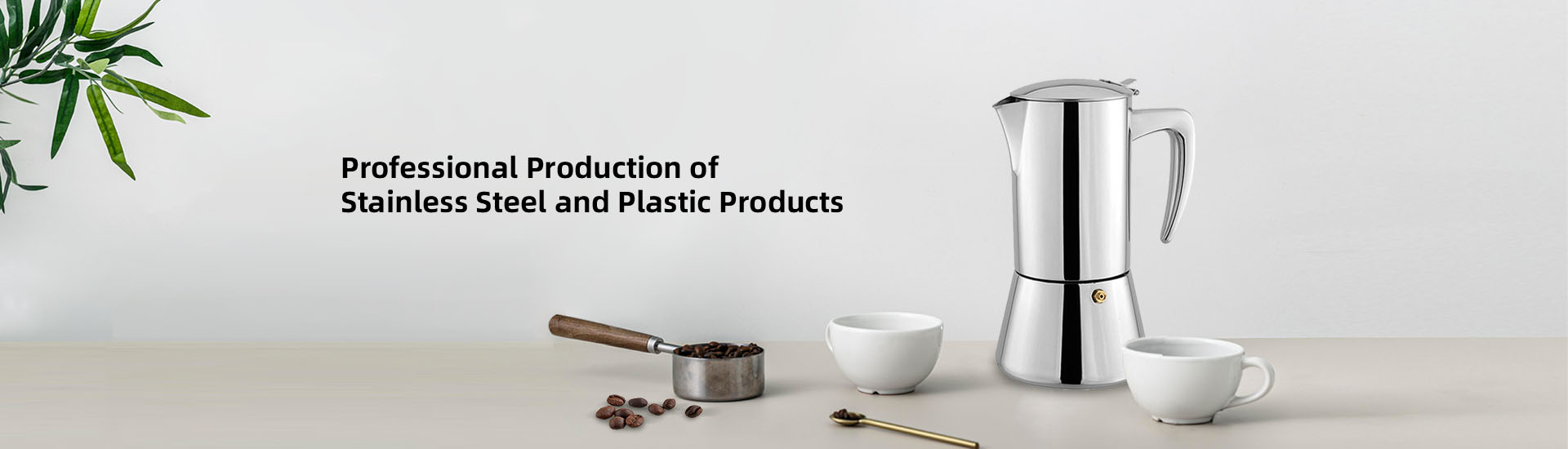
Stainless steel household products provide stronger durability and premium value, while plastic household products offer lightweight design and cost efficiency. The better manufacturing solution depends on product positioning, application needs, and target markets.
Stainless steel and plastic household products use different materials that influence durability, appearance, production processes, and market applications.
Stainless steel household products are manufactured using metal materials known for strength, corrosion resistance, and long-term performance. They are commonly used for products requiring durability and premium appearance.
Plastic household products use engineered plastics to achieve lightweight structures, flexible designs, and efficient mass production.
For manufacturers, material selection affects product design, manufacturing methods, cost control, and customer expectations.
Stainless steel household products are widely valued for their durability and professional appearance.
Their advantages include:
Long service life
Strong corrosion resistance
High structural strength
Premium metallic appearance
Easy cleaning and maintenance
Common applications include:
Kitchenware
Storage products
Drinkware
Household tools
Hotel and commercial supplies
From a manufacturing perspective, stainless steel product quality depends on:
Material grade selection
Metal forming accuracy
Welding quality
Surface treatment
Assembly consistency
Plastic household products provide benefits through flexibility and efficient production.
Their advantages include:
Lightweight structure
Lower production cost
Flexible shapes and colors
Easy mass production
Wide application range
Plastic products are commonly used for:
Household accessories
Lightweight kitchen products
Consumer goods
Manufacturing considerations include:
Plastic material selection
Injection molding accuracy
Product strength
Surface appearance
Safety requirements
Both materials provide different manufacturing advantages.
| Comparison Factor | Stainless Steel Household Products | Plastic Household Products |
|---|---|---|
| Durability | Excellent long-term performance | Depends on material quality |
| Weight | Heavier structure | Lightweight |
| Appearance | Premium metal finish | Flexible colors and shapes |
| Production Cost | Higher | Lower |
| Design Flexibility | Moderate | High |
| Market Position | Premium and professional | Practical and affordable |
The better choice depends on product goals and customer expectations.
Stainless steel generally provides stronger durability because of its mechanical strength and resistance to corrosion.
Advantages include:
Better resistance to wear
Lower replacement frequency
Stable appearance over time
Suitable for repeated use
Plastic products can also provide reliable durability when using high-quality engineering plastics and proper manufacturing processes.
The final performance depends on product design and material quality.
Both materials have strong applications in household markets.
Stainless steel products are suitable for:
Premium kitchenware
Daily-use utensils
Professional household products
Commercial environments
Plastic products are suitable for:
Lightweight household solutions
Storage products
Colorful lifestyle products
Cost-sensitive markets
Manufacturers select materials based on product function and target consumers.
The production processes are different because the materials behave differently.
Stainless steel manufacturing includes:
Sheet metal forming
Stamping
Welding
Polishing
Surface finishing
Plastic manufacturing includes:
Injection molding
Mold development
Material mixing
Surface treatment
Assembly
Each material requires different production expertise and quality control methods.
Plastic household products usually provide greater design flexibility.
Customization options include:
Product shape
Colors
Textures
Functional structures
Branding elements
Stainless steel products provide customization through:
Product dimensions
Surface finishes
Structural designs
Material combinations
Packaging solutions
For premium brands, stainless steel customization can create stronger product identity.
Plastic products generally provide advantages in initial production costs because of:
Efficient molding processes
Lower material costs
Faster mass production
Stainless steel products may require higher investment due to:
Metal processing
Surface finishing
More complex fabrication
However, stainless steel products may provide stronger long-term value because of durability and premium positioning.
Yes. Many household products combine both materials to balance performance and cost.
Common combinations include:
Stainless steel body with plastic handles
Metal structures with plastic components
Stainless steel parts with ergonomic plastic elements
This approach allows manufacturers to optimize:
Durability
Weight
Comfort
Production efficiency
Reliable household product manufacturing requires experience in both materials and production processes.
Important capabilities include:
Material selection
Product development
Metal processing
Injection molding
Surface treatment
Quality inspection
OEM and ODM support
Manufacturing experience helps ensure consistent product performance and market suitability.
The right choice depends on brand positioning.
Stainless steel household products are suitable for brands focusing on:
Premium quality
Durability
Professional appearance
Long-term value
Plastic household products are suitable for brands focusing on:
Affordable products
Flexible designs
Mass-market applications
Fast product development
Understanding market needs helps brands choose the most suitable manufacturing solution.
Stainless steel household products provide advantages in durability, premium value, and long-term performance. Plastic household products provide advantages in lightweight design, cost efficiency, and flexible production.
For manufacturers and brands, the better solution depends on product requirements, target markets, and the balance between performance, cost, and design flexibility.

 WhatsApp:
 Phone:
 Contact Now
