
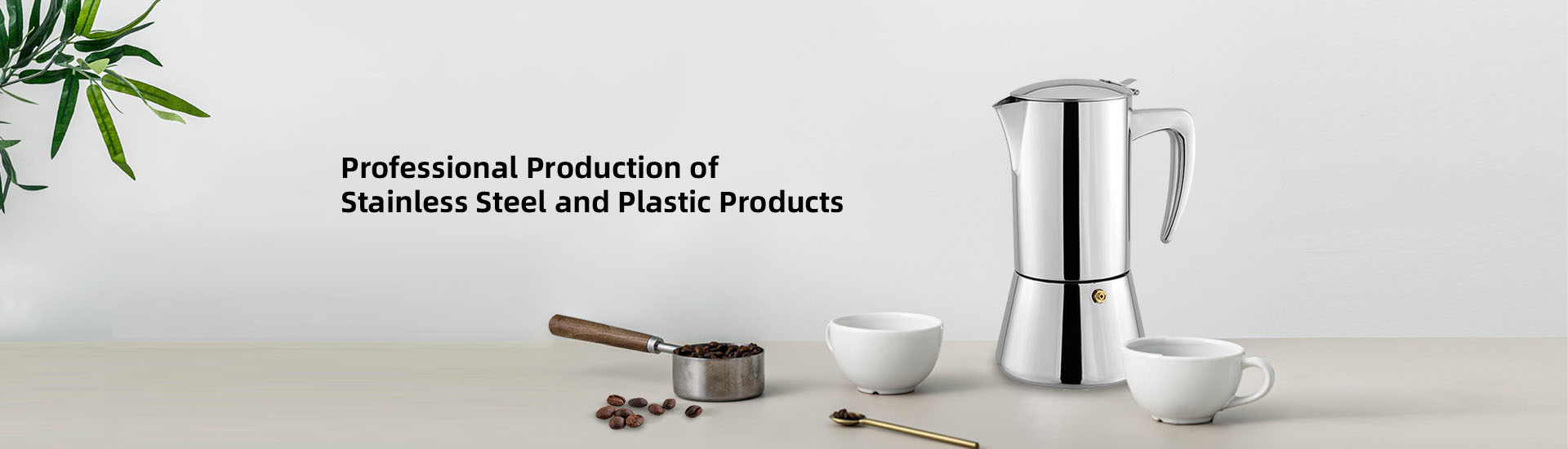
oem kitchenware production is not simply adding a logo to an existing product. A complete OEM process involves product development, material selection, engineering evaluation, sample approval, mass manufacturing, quality control, and export preparation.
For a reliable OEM kitchenware manufacturer, every step must be controlled to ensure that customized products maintain the same quality from prototype development to bulk production.
SELLWELL specializes in stainless steel and plastic household products, with its own stainless steel processing and plastic injection capabilities. The factory covers approximately 60,000㎡, employs more than 500 staff, and supports OEM and ODM projects for global customers. (sellwell-hk.com)
The first stage of OEM kitchenware production is understanding the product requirements.
Before development begins, manufacturers should confirm:
Product function
Target market
Material requirements
Product dimensions
Surface finish
Packaging specifications
Compliance requirements
A detailed project brief helps avoid design changes during later production stages.
For example, stainless steel kitchen utensils, coffee makers, storage containers, and barware products may require different materials, structures, and manufacturing processes.
Material selection directly affects product durability, appearance, and market acceptance.
Common materials used in kitchenware production include:
| Material | Application | Key Feature |
|---|---|---|
| 304 Stainless Steel | Kitchen utensils and containers | Good corrosion resistance |
| 316 Stainless Steel | Premium applications | Higher corrosion resistance |
| Food-grade Plastic | Handles and accessories | Lightweight and flexible |
| Heat-resistant Glass | Coffee and tea products | Temperature stability |
During OEM projects, engineers evaluate product structure, material compatibility, production feasibility, and cost control before creating samples.
A manufacturer with internal engineering capability can provide faster solutions compared with suppliers that rely on multiple external factories.
Sample development is an important stage before mass production.
The typical process includes:
Product drawing review
Prototype production
Appearance inspection
Functional testing
Customer confirmation
Production approval
Samples help verify:
Product dimensions
Material quality
Surface treatment
Assembly accuracy
User experience
For ODM projects, manufacturers may also modify existing designs by adjusting colors, finishes, structures, accessories, and packaging.
After sample approval, the manufacturer prepares for mass production.
A complete kitchenware manufacturing process may include:
Stainless steel cutting
Metal forming
Welding
Polishing
Plastic injection molding
Component assembly
Surface treatment
Packaging
SELLWELL integrates stainless steel manufacturing and plastic injection capabilities, allowing different components to be coordinated within one production system. This helps improve production consistency and reduces communication problems during bulk manufacturing. (sellwell-hk.com)
Quality control should run through the entire OEM production process instead of only checking finished products.
Important checkpoints include:
| Production Stage | Quality Inspection |
|---|---|
| Raw materials | Material verification |
| Metal processing | Size and structure inspection |
| Surface treatment | Finish consistency |
| Assembly | Component matching |
| Finished products | Function and appearance testing |
| Packaging | Shipment protection |
SELLWELL has passed ISO 9001:2015 certification and conducted audits including SMETA, BSCI, GMP, and SCAN, demonstrating established quality management practices. (sellwell-hk.com)
Bulk production requires stable manufacturing control.
Before starting large orders, manufacturers should confirm:
Production capacity
Raw material availability
Production schedule
Inspection standards
Packaging requirements
Shipping plan
A professional OEM kitchenware manufacturer should maintain consistent quality between the approved sample and every production batch.
This is especially important for retailers and brands that need repeat orders with the same product specifications.
International kitchenware products must meet different market requirements.
Export preparation usually includes:
Product testing
Food contact material documentation
Packaging labels
Shipping documents
Customer-specific compliance requirements
The European Union requires food-contact materials to comply with safety requirements under Regulation EC No 1935/2004, ensuring materials do not release substances that may affect consumer health. (food.ec.europa.eu)
A manufacturer with export experience can help reduce compliance risks and improve shipment efficiency.
Before starting an OEM project, evaluate:
| Category | Key Question |
|---|---|
| Product design | Can the supplier support customization? |
| Materials | Are specifications clearly confirmed? |
| Manufacturing | Are key processes controlled internally? |
| Quality | Are inspection standards defined? |
| Capacity | Can bulk orders be delivered consistently? |
| Compliance | Are export requirements understood? |
Successful OEM kitchenware production requires cooperation between design, engineering, manufacturing, and quality control.
A reliable supplier should not only produce products but also provide technical support, process management, and stable production capability.
With integrated stainless steel and plastic manufacturing resources, SELLWELL supports OEM and ODM kitchenware projects through product development, mass production, quality control, and export experience.

 WhatsApp:
 Phone:
 Contact Now